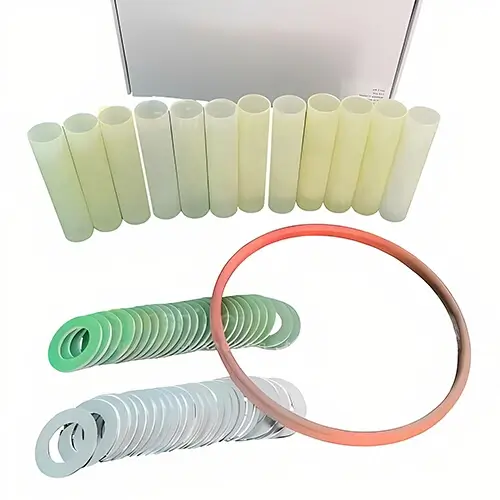
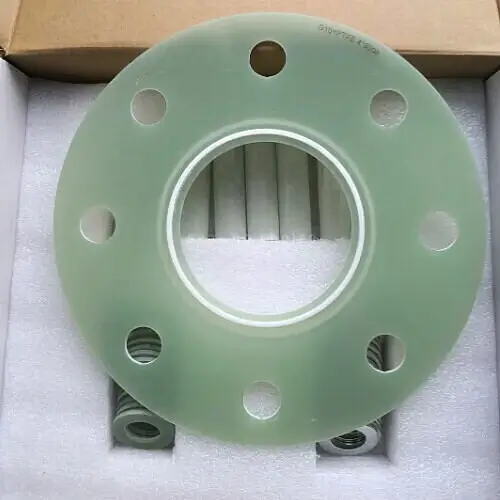
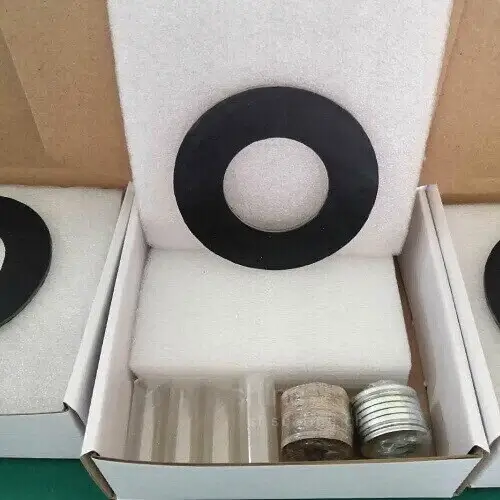
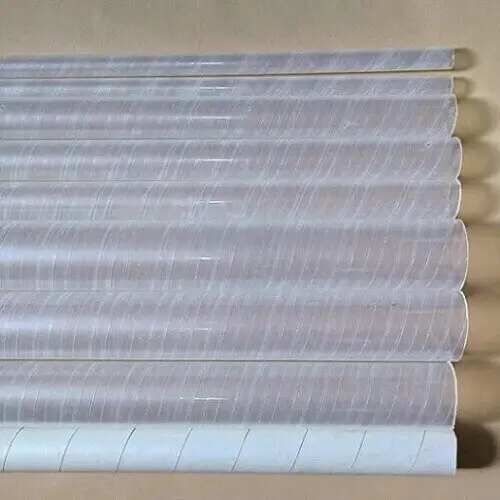
As a procurement lead or piping engineer, you may have received an urgent request for flange insulating gasket kits and wondered: What are the components of a flange insulating gasket kit? The short answer is that a complete kit contains an insulating gasket, insulating sleeves for bolts, insulating washers, and steel backing washers. Yet the difference between a reliable order and a costly field failure is not just the list of parts—it is whether each component is sized correctly, made from the right dielectric material, and compatible with the flange pressure class and chemical environment. Picture a gas pipeline isolation joint at 3 a.m.: a maintenance crew bolts up the joint, but one undersized sleeve cracks during torqueing. The result is electrical shorting, accelerated corrosion, and a shutdown that could have been prevented at the purchasing stage. This guide explains each component, how they work together, and how to specify kits that prevent these failures. Ningbo Kaxite Sealing Materials Co., Ltd. supplies complete, traceable flange insulating gasket kits, so procurement teams can buy with confidence instead of guessing at part numbers.
Article outline
When a maintenance planner says “we need a flange insulation kit,” the purchasing team often receives only a gasket specification. That seems simple until the job site reports that bolts were installed without insulating sleeves, which caused the joint to become electrically conductive. In corrosion-critical systems such as gas pipelines, water injection lines, or tank farm piping, that small omission can invalidate the cathodic protection design and accelerate external corrosion. The solution is to treat the flange insulating gasket kit as a set: gasket, sleeves, washers, and backing washers must be specified together and delivered in one package. This reduces missing-part delays, ensures material compatibility, and gives the installer a single product code to verify. Ningbo Kaxite Sealing Materials Co., Ltd. solves this by supplying ready-to-install kits matched to your flange size and pressure class, so buyers do not have to combine parts from multiple suppliers.
| Kit component | Common material options | Key procurement check |
|---|---|---|
| Insulating gasket | Neoprene-faced phenolic, glass epoxy, HT phenolic | Match flange rating, media temperature, pressure |
| Insulating sleeve | Polyethylene, PTFE, Nomex epoxy | Length covers full flange thickness plus washers |
| Insulating washer | Glass epoxy, phenolic laminate | Outer diameter fits bolt hole counterbore |
| Steel backing washer | Zinc-plated carbon steel, stainless steel | Prevents insulating washer damage during torqueing |
When an RFQ says “flange insulating gasket kit” without a bill of materials, the buyer must know exactly what to ask for. Otherwise, quotations can vary widely and an incomplete kit may arrive on site. What are the components of a flange insulating gasket kit? Professionally, they are the insulating gasket, insulating sleeves, insulating washers, and steel backing washers. The insulating gasket creates a dielectric barrier between flange faces. The insulating sleeves prevent the bolts from touching the flange bore and creating a conductive path. The insulating washers isolate the nuts from the flange surface. The steel backing washers protect the softer insulating washers and distribute the compressive load during bolt torqueing. Each component addresses a specific failure path. Without the gasket, pressure is sealed but electricity still flows across the flange. Without sleeves, the bolt becomes a conductor even if the gasket is good. Without insulating washers, the nut contact can bypass the entire set. Without backing washers, soft insulating washers can crack under high bolt load. Ningbo Kaxite supplies all four components in one kit with traceable materials, reducing the chance of mixed or missing parts.

| Component | Primary role | Consequence if missing | Typical specification |
|---|---|---|---|
| Insulating gasket | Seals pressure and blocks electrical flow between flange faces | Flange becomes electrically shorted | ASME B16.20 compatible, rated for line pressure and temperature |
| Insulating sleeve | Isolates bolt from flange bore | Bolt conducts current across joint | Length equals flange thickness plus two washers |
| Insulating washer | Isolates nut from flange face | Nut becomes a bridge for current | High compressive strength, typically 40,000 psi or more |
| Steel backing washer | Protects insulating washer and evenly spreads bolt load | Insulating washer cracks under torque | Zinc-plated or stainless steel, sized for bolt diameter |
A pipeline operator notices unexpected metal loss near an underground flange even though the cathodic protection system is running. Field technicians find that moisture has entered the flange and one insulating washer has absorbed water, creating a weak electrical bridge. This scenario is common when buyers select components only by price and ignore water absorption, dielectric strength, and compressive strength. The solution is to specify flange insulating gasket kit components that are designed for wet service, high bolt loads, and long-term electrical isolation. High-quality glass epoxy or phenolic laminates provide stable dielectric performance, while neoprene-faced gaskets offer excellent sealing and electrical isolation in many buried and above-ground applications. Ningbo Kaxite Sealing Materials Co., Ltd. helps solve this problem by offering standard and customized kits with tested materials, so the components maintain isolation performance over years of service.
| Material property | Recommended value | Why it matters |
|---|---|---|
| Dielectric strength | ≥ 300 V/mil for insulating sleeves and washers | Prevents voltage breakdown across the joint |
| Water absorption | Below 1% for glass epoxy | Preserves insulation in wet or buried service |
| Compressive strength | ≥ 40,000 psi for insulating washers | Withstands bolt torque without cracking |
| Maximum operating temperature | Match fluid temperature, often up to 200°C for HT phenolic | Avoids premature loss of sealing or insulation |
A buyer orders a 150# flange insulating gasket kit for a gas line, but the actual piping is 300# with a raised-face flange. When the kit arrives, the gasket thickness and sleeve length are wrong, and the job is delayed. This is a classic specification mismatch. The solution is to build a simple specification checklist before requesting a quote: flange standard, nominal pipe size, pressure class, flange facing type, bolt diameter, bolt count, operating temperature, and service media. With these parameters, the supplier can select the correct gasket ID, OD, thickness, sleeve length, and washer dimensions. Ningbo Kaxite Sealing Materials Co., Ltd. supports procurement teams by confirming each parameter against flange standards such as ASME B16.5, ASME B16.47, or EN 1092, reducing the risk of costly reshipments.
| Selection parameter | Example value | Impact on kit components |
|---|---|---|
| Flange standard | ASME B16.5 | Determines gasket seating and bolt circle |
| Pressure class | 300# | Controls gasket thickness and material strength |
| Flange facing | Raised face | Affects gasket inner and outer diameter |
| Bolt diameter | 1-1/4 inch | Sets sleeve, washer, and backing washer dimensions |
| Operating temperature | 150°C | Selects phenolic, glass epoxy, or HT material |
Even the best flange insulating gasket kit will fail if installation is rushed. A common field complaint is that an insulating sleeve cracked because the bolt was forced through misaligned flanges, or that a washer was omitted because the crew did not follow the assembly sequence. The procurement team often receives the blame, even though the real issue is a lack of clear installation guidance. The solution is to purchase from a supplier that provides an installation checklist and component drawings, and to keep the kits packaged in clear, labeled sets. That way, the crew can verify the gasket, sleeves, washers, and backing washers before starting. Ningbo Kaxite Sealing Materials Co., Ltd. includes clear product marking and supports buyers with installation guidance, helping prevent field errors that turn into expensive rework.
| Installation step | Common defect | Corrective action |
|---|---|---|
| Clean flange faces | Dirt or rust prevents gasket seating | Wire brush and inspect for scratches |
| Align flanges | Forced bolt installation cracks sleeves | Align within allowable flange tolerance |
| Insert sleeves | Short sleeves expose bolt to flange | Use full-length sleeves per flange schedule |
| Install washers | Metal washer placed directly against flange | Place insulating washer first, then steel backing washer |
| Torque bolts | Uneven torque causes gasket leakage | Use cross-pattern torque sequence and re-torque after 24 hours |
Procurement teams are under pressure to compare quotations quickly, but the lowest price can hide missing components or untested materials. Imagine a supply chain manager who chooses a flange insulating gasket kit based on price alone, then faces a delayed project because the gasket cannot withstand the operating temperature. The solution is to qualify suppliers before placing the order. Ask for material test reports, dimensional inspection records, and experience with your flange standards. Confirm that the supplier can provide a complete kit rather than separate parts from different sources. Ningbo Kaxite Sealing Materials Co., Ltd. addresses these concerns by supplying complete flange insulating gasket kits, verifying dimensions against flange specifications, and offering traceable material certificates for critical applications.
| Supplier qualification item | Why it matters | What to request |
|---|---|---|
| Complete kit supply | Prevents missing sleeves or washers on site | Packing list with all four components |
| Material certification | Confirms dielectric and mechanical properties | Mill test certificate or supplier test report |
| Dimensional verification | Ensures fit with flange and bolts | Inspection report or drawing approval |
| Flange standard experience | Reduces risk of wrong pressure class selection | Reference list for ASME, EN, or API flanges |
Question: What are the components of a flange insulating gasket kit for a standard raised-face flange?
Answer: For a standard raised-face flange, a complete kit normally includes one insulating gasket, one insulating sleeve per bolt, one insulating washer per bolt, and one steel backing washer per bolt. The number of fasteners determines the number of sleeves and washers. For example, a 150# 6-inch flange with eight bolts requires one gasket, eight sleeves, eight insulating washers, and eight steel backing washers. The gasket is placed between the flange faces, while the sleeves, insulating washers, and backing washers are installed on each bolt and nut assembly.
Question: Do the components of a flange insulating gasket kit change with flange facing type?
Answer: Yes. The main component dimensions and sometimes the gasket construction change with the flange facing type. For a raised-face flange, the gasket is typically larger than the raised face and extends into the bolt circle. For a flat-face flange, the gasket may cover the full face to prevent flange bending. For RTJ flanges, a special insulating joint or conversion arrangement may be required because standard flat insulating gaskets do not fit the ring groove. Buyers should always state the flange facing type when requesting a quotation to avoid receiving a kit that cannot seal or isolate correctly.
C. Smith, 2019. Performance of Dielectric Gaskets in Flange Isolation. Journal of Pipeline Engineering, 18(3), 45-53.
J. Lu, 2020. Electrical Isolation of Flanged Joints in Cathodically Protected Pipelines. Corrosion Engineering Science and Technology, 55(2), 112-120.
M. Patel, 2021. Mechanical Behavior of Glass Epoxy Insulating Washers under High Bolt Load. Journal of Pressure Vessel Technology, 143(4), 041502.
R. Thompson, 2018. Water Absorption in Phenolic Laminates for Flange Insulation Applications. Materials Performance, 57(7), 32-39.
D. Kim, 2020. Failure Analysis of Insulating Sleeves in Offshore Flange Joints. Engineering Failure Analysis, 113, 104552.
A. Fernandez, 2019. Dielectric Strength of Neoprene-Faced Phenolic Gaskets. IEEE Transactions on Dielectrics and Electrical Insulation, 26(5), 1587-1594.
B. Chen, 2022. Torque Sequencing and Its Effect on Flange Insulation Kit Integrity. International Journal of Pressure Vessels and Piping, 198, 104683.
S. Rahman, 2017. Comparative Study of Isolation Gasket Materials for Sour Service. Journal of Natural Gas Science and Engineering, 45, 670-678.
G. Williams, 2021. Cathodic Protection Effectiveness in Flanged Pipeline Networks. Corrosion Reviews, 39(3), 245-257.
H. Zhang, 2023. Specification and Qualification of Flange Insulation Kits for Gas Transmission. Materials and Corrosion, 74(8), 1125-1136.
-