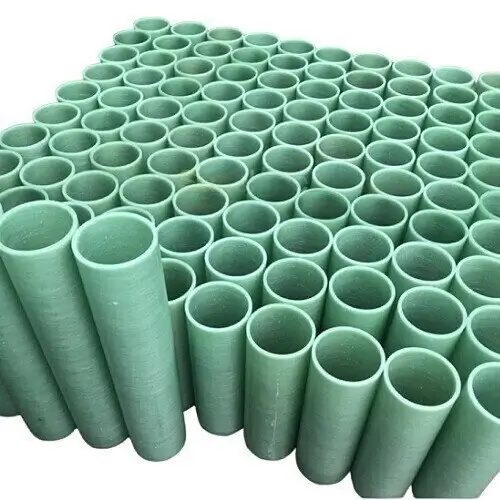
Cathodic Protection Flange Insulating Gaskets for Corrosion Loss Control and Stray Current Isolation
Cathodic protection flange insulating gaskets are used for controlling losses due to corrosion. They can be used to control stray electric currents in piping at oil, gas, water, refinery and chemical plants, to increase the effectiveness of cathodic protection systems.
Available in three standard gasket geometries — Type E full face, Type F ring gasket and Type D RTJ gasket — so the same insulating gasket can be matched to full-face, raised-face and ring type joint flanges in one product family. Cathodic protection flange insulating gaskets are getting more and more important in the oil and gas, petroleum, refinery and power industry.
Cathodic protection flange insulating gaskets are gaskets used for controlling losses due to corrosion. They can be used to control stray electric currents in piping at oil, gas, water, refinery and chemical plants, to increase the effectiveness of cathodic protection systems. The gasket seals the flange joint and electrically isolates the two flanges from each other at the same time.
A cathodic protection system works by driving a small electrical current onto the pipeline so the pipeline becomes the cathode and stops corroding. If two adjacent flanges are in direct metal contact, the protection current can short-circuit across the flange joint and never reach the pipeline section beyond it. A cathodic protection flange insulating gasket breaks that electrical path so the protection current stays in the pipeline section that needs protection — reducing the total current required and lowering the cost of the cathodic protection system.
In addition to cathodic protection, the same gasket controls stray electric currents — unintended currents that flow through the pipeline from other sources such as nearby railway systems, welding equipment or electrical faults. Left uncontrolled, stray currents can accelerate corrosion at the flanges and create a safety hazard. Cathodic protection flange insulating gaskets are getting more and more important in the oil and gas, petroleum, refinery and power industry.
Cathodic protection flange insulating gaskets are used wherever a bolted flange joint must be sealed and electrically isolated at the same time. The six most common application sectors are listed below.
Oil and Gas Pipelines
Transmission and distribution pipelines where isolation joints are required at regular intervals for corrosion control and to increase the effectiveness of the cathodic protection system.
Petroleum Refineries
Process piping, heat exchanger nozzles and vessel connections where dissimilar metals meet at a bolted flange joint and galvanic corrosion must be prevented.
Refinery and Chemical Plants
Chemical process piping where the flange joint must be sealed and electrically isolated, and where stray currents must be controlled to protect the plant.
Water and Wastewater Pipelines
Large-diameter water and wastewater transmission mains where the flange joint must be isolated to protect the pipeline coating and the cathodic protection system.
Power Industry
Power plant cooling water systems, circulating water lines and auxiliary piping where stray currents must be controlled and cathodic protection must remain effective.
Tank Farm and Loading Terminals
Tank inlet and outlet flanges, loading and unloading lines where static charge transfer must be eliminated and the tank isolated from the process piping.
Cathodic protection flange insulating gaskets are available in three standard flange-facing geometries. The geometry is set by the flange type, not by the retainer material — so the same G10, G11 or phenolic retainer can be cut into any of the three types.
Type E · Full Face Gasket
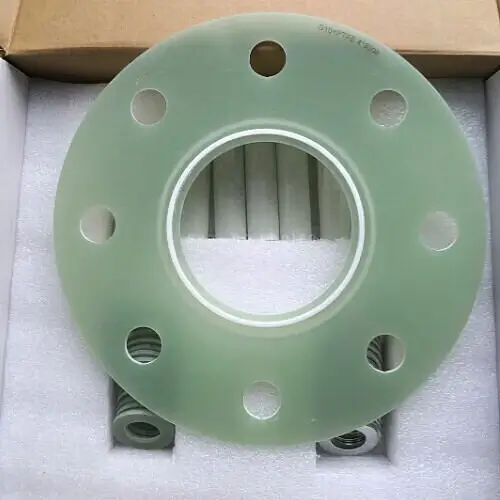
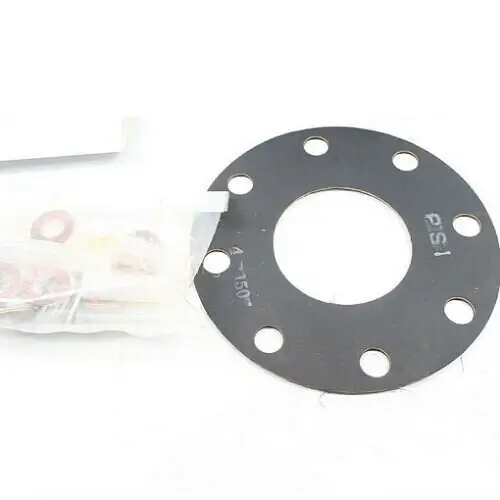
Type E (full face) insulating gasket kit provides complete protection of both flange faces. The gasket has same outside diameter of flanges. This feature will prevent collection of foreign matter between the flange faces to ensure complete cathodic isolation.
Recommended For
Full-face flanges, raised-face flanges, and any flange joint where the gasket must cover the entire flange face to prevent foreign matter from collecting between the flange faces.
Type F · Ring Gasket
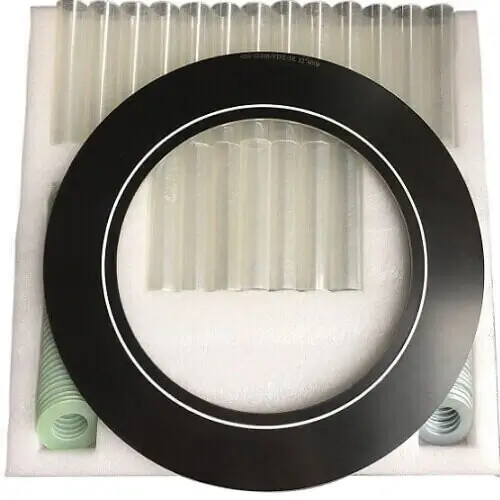
Type F (ring gasket) insulating gasket is manufactured to fit only the raised face surface of the flanges. Outside diameter of the gasket is designed to be slightly less than the inside diameter of the bolt circle. It is recommended that the flanges be wrapped to prevent foreign material from shorting out the flanges.
Recommended For
Raised-face flanges only. The gasket centres between the bolts and installs easily. Wrapping the flange OD is recommended to keep foreign material out of the gap between the two flange faces.
Type D · RTJ Gasket
Type D gaskets are available for RTJ flanges, usually produced according to flange standard ASME and API. The insulating ring joint gasket seats in the ring groove of a ring type joint flange and electrically isolates the two flanges at the same time.
Recommended For
Ring type joint flanges in high-pressure oil and gas service, wellheads, Christmas trees and refinery process piping where the joint must be sealed and electrically isolated at high pressure.
Installation Note
It is recommended that the flange OD be wrapped with sealing tape on both Type F and Type E installations to prevent foreign material from lodging between the exposed portions of the flanges and shorting out the isolation. This is one of the most common causes of cathodic protection failure on pipeline joints, and the wrap is a low-cost way to keep the isolation reliable through the service life of the joint.
A cathodic protection system on a pipeline requires electrical continuity between the anode bed and the pipeline section that is being protected, and electrical isolation between that pipeline section and the sections next to it. Without flange isolation, the protection current leaks across the flange joint, and the pipeline beyond the joint does not receive enough current to prevent corrosion.
The table below defines the fit, function and options of the cathodic protection flange insulating gasket range. Confirm the exact flange size, pressure class, gasket type and retainer material on the enquiry — custom gaskets to drawing are accepted.
Cathodic protection flange insulating gaskets are gaskets used for controlling losses due to corrosion. They can be used to control stray electric currents in piping at oil, gas, water, refinery and chemical plants, to increase the effectiveness of cathodic protection systems. By electrically isolating two adjacent flanges, the gasket stops the cathodic protection current from short-circuiting across the flange joint, so the protection current reaches the pipeline section it is meant to protect.
A cathodic protection system works by driving a small electrical current onto the pipeline so the pipeline becomes the cathode and stops corroding. If two adjacent flanges are in direct metal contact, the protection current can short-circuit across the flange joint and never reach the pipeline section beyond it. A cathodic protection flange insulating gasket breaks that electrical path so the protection current stays in the pipeline section that needs protection, reducing the total current required and lowering the cost of the cathodic protection system.
Type E (full face) insulating gasket kit provides complete protection of both flange faces. The gasket has the same outside diameter as the flange, which prevents collection of foreign matter between the flange faces to ensure complete cathodic isolation. Type F (ring gasket) insulating gasket is manufactured to fit only the raised face surface of the flanges, with outside diameter designed to be slightly less than the inside diameter of the bolt circle — it is recommended that the flanges be wrapped to prevent foreign material from shorting out the flanges. Type D gaskets are available for RTJ flanges, usually produced according to flange standard ASME and API.
Cathodic protection flange insulating gaskets are used in the oil and gas industry, the petroleum industry, refineries, chemical plants, water and wastewater pipelines, and the power industry. In each of these industries, the gasket controls stray electric currents and increases the effectiveness of the cathodic protection system that protects the pipeline or plant from corrosion.
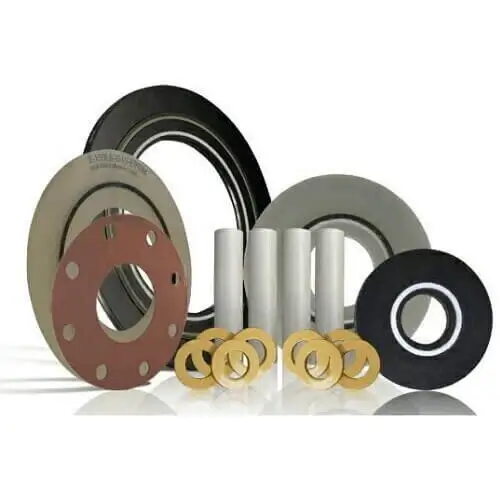
A cathodic protection flange insulating gasket kit normally includes a central insulating gasket, one insulating sleeve per bolt, two insulating washers per bolt, and two plated steel washers per bolt. Together these components break every electrical path through the flange joint — across the flange faces, through the bolt holes, and around the bolts — so that the cathodic protection current cannot short-circuit across the joint.
A standard flange gasket only seals the joint. A cathodic protection flange insulating gasket seals the joint and electrically isolates the two flanges from each other at the same time. The insulating retainer (usually G10, G11, G7 or phenolic) blocks the electrical current, while the neoprene, nitrile or other facing provides the sealing surface. The kit also includes insulating sleeves and insulating washers so every electrical path through the joint is broken.
Send us your specification — we reply within 24 hours
Tell us the flange size, the pressure class, the flange type (Type E full face, Type F ring gasket or Type D RTJ), the retainer material (G10, G11, G7, plain phenolic, neoprene faced phenolic or nitrile faced phenolic), the flange standard, the quantity, and the pipeline service conditions. If you are not sure which gasket type and retainer material fit your cathodic protection system, send us the flange drawing and the process conditions and we will match the correct gasket.
Address
No 432 Zhenhai Middle Road, Luotuo Street, Zhenhai District, Ningbo City, Zhejiang China
Tel