How strong is NEMA G10 Epoxy Fiberglass Tube compared to other materials? If you are sourcing insulating tubes for high-voltage switchgear, transformer supports, or severe mechanical load applications, this question can make or break your project. G10 is a continuous glass fabric laminate bonded with epoxy resin, and it delivers an unusual combination of high tensile strength, excellent dielectric performance, and moisture resistance. Yet many procurement teams still compare it only against FR4 or generic phenolic, missing critical differences in load capacity, temperature stability, and machining consistency. Imagine a busbar support that cracks during assembly because the tube was specified by “looks similar” instead of actual mechanical data. That failure leads to rework, delayed shipments, and higher landed costs. In this guide, we break down real performance numbers, compare G10 with metals, plastics, and other laminates, and show how the right supplier eliminates guesswork. Ningbo Kaxite Sealing Materials Co., Ltd. helps you select the correct NEMA G10 epoxy fiberglass tube for your exact electrical and mechanical requirements, reducing risk and total sourcing time.
Table of Contents
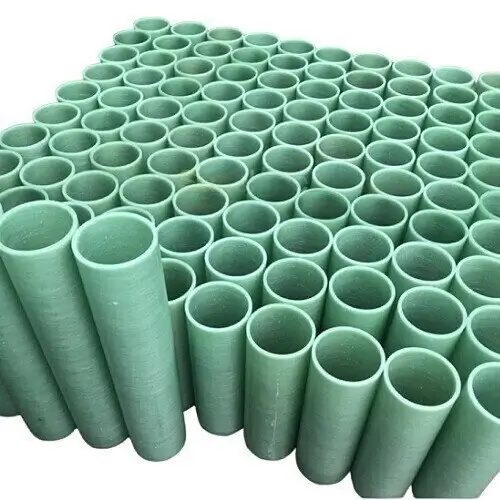
NEMA G10 epoxy fiberglass tube is produced by wrapping or rolling continuous glass fabric that is saturated with epoxy resin, then curing it under heat and pressure. This process creates a thermoset composite with high mechanical strength, low moisture absorption, and excellent electrical insulation. Compared with plastics such as PVC, nylon, or PTFE, G10 offers far higher flexural and compressive strength at similar or lighter weight. Compared with metals, G10 provides dielectric isolation and corrosion resistance while maintaining enough mechanical rigidity for demanding electrical assemblies.
Procurement teams often focus on “strength” as a single number, but real applications require balancing tensile, compressive, flexural, and impact performance. For example, a transformer bushing support must resist bending during installation, compression under clamping force, and electrical tracking under high voltage. A tube that is strong in tension but brittle in impact can still fail in the field. NEMA G10 is known for its balanced mechanical profile, which is why it is widely specified in switchgear, motor insulation, fuse tubes, and structural insulators. Understanding these properties helps you avoid costly re-qualification and downstream assembly failures.
Scenario: A buyer is replacing aluminum standoffs inside a medium-voltage cabinet because the metal parts require additional insulation sleeving. The buyer asks, “Will G10 be strong enough?” The raw tensile strength of G10 is typically 40,000–45,000 psi, while aluminum 6061-T6 is around 45,000 psi. At first glance they look similar, but G10 weighs about 70% less than aluminum. More importantly, G10 already provides electrical insulation, eliminating the need for separate bushings or coatings.
For flexural strength, G10 ranges from 55,000 to 65,000 psi, exceeding many engineering plastics such as nylon 6/6 (about 12,000–14,000 psi) and acetal (about 13,000–16,000 psi). This means a G10 tube can span longer distances without excessive deflection. The solution is to specify NEMA G10 when the design requires combined mechanical support and electrical isolation. Use the table below for quick comparison.
| Material | Tensile Strength (psi) | Flexural Strength (psi) | Density (g/cm³) | Electrical Insulation |
|---|---|---|---|---|
| NEMA G10 epoxy fiberglass tube | 40,000–45,000 | 55,000–65,000 | 1.80–1.90 | Excellent |
| Aluminum 6061-T6 | 45,000 | 45,000–50,000 | 2.70 | No |
| Nylon 6/6 | 11,000–13,000 | 12,000–14,000 | 1.14 | Good |
| Acetal (POM) | 9,500–11,000 | 13,000–16,000 | 1.41 | Good |
| PTFE | 3,000–5,000 | 2,500–4,000 | 2.20 | Excellent |
This table shows why G10 often replaces metal standoffs and plastic spacers in high-voltage equipment. It delivers the mechanical reliability of metal-like strength with the insulation of a thermoset composite.
Pain point: Your assembly team over-tightens a clamping bolt and cracks a phenolic tube. Compressive strength becomes the deciding factor. NEMA G10 epoxy fiberglass tube has a compressive strength of approximately 50,000–60,000 psi flatwise, significantly higher than phenolic paper laminates (30,000–40,000 psi) and many cast resins. This allows G10 tubes to withstand high clamping forces in busbar supports, transformer lead channels, and high-pressure seal stacks without deformation.
Solution: Choose G10 tubes with controlled wall thickness and smooth internal and external surfaces. Ningbo Kaxite Sealing Materials Co., Ltd. supplies G10 tubes with tight dimensional tolerances and consistent resin distribution, reducing stress concentration points that often initiate cracking. In multi-bolt assemblies, specify a flat washer and torque limit based on the tube’s compressive rating. This simple step prevents field failures. The table below compares compressive performance and typical failure mode.
| Material | Compressive Strength (psi) | Typical Failure Mode Under Overload | Machining Consistency |
|---|---|---|---|
| NEMA G10 | 50,000–60,000 | Gradual delamination warning | High |
| Phenolic paper (XX) | 30,000–40,000 | Sudden cracking | Moderate |
| FR4 | 45,000–55,000 | Delamination under high heat | High |
| Ceramic | 150,000–300,000 | Sudden brittle fracture | Difficult |
Mechanical strength alone does not qualify a material for electrical insulation. NEMA G10 epoxy fiberglass tube offers dielectric strength of 700–900 V/mil, which remains stable under humid conditions because the epoxy system has very low moisture absorption, typically 0.10–0.20% after 24 hours. In contrast, paper-based phenolic can absorb 1.0–2.0% moisture, causing insulation resistance to drop and dimensions to swell. This is why G10 is preferred for outdoor or tropical climate equipment.
Thermal performance also matters. G10 retains good mechanical strength at operating temperatures up to 130°C, with short-term excursions to 150°C. Specialty grades such as G11 use a high-temperature resin system for continuous use at 180°C. For most procurement decisions, G10 provides the best balance of cost, machinability, and thermal endurance. The table below summarizes key electrical and thermal values.
| Property | NEMA G10 | NEMA FR4 | Phenolic XX | PTFE |
|---|---|---|---|---|
| Dielectric Strength (V/mil) | 700–900 | 600–800 | 300–500 | 1,000–1,500 |
| Moisture Absorption (24h %) | 0.10–0.20 | 0.10–0.20 | 1.0–2.0 | <0.01 |
| Continuous Operating Temp | 130°C | 130°C | 120°C | 260°C |
How strong is NEMA G10 epoxy fiberglass tube compared to other materials? Many buyers assume FR4 and G10 are interchangeable because both are glass-epoxy laminates. The key difference is resin chemistry and cure behavior. FR4 includes a brominated flame retardant, which slightly reduces mechanical strength and can make machining edges more brittle. G10 offers about 10–15% higher flexural strength than standard FR4 and better dimensional stability in high-humidity environments. G11, made with a high-temperature resin, provides similar mechanical strength but superior performance above 150°C. Phenolic paper laminates are cheaper but weaker and more moisture-sensitive.
For loading strength, G10 generally outperforms FR4 in terms of flexural modulus and delamination resistance. If your application involves tight-ID tubes that must be drilled, tapped, or machined with fine threads, G10 is the safer default. Ningbo Kaxite Sealing Materials Co., Ltd. can help you compare G10, FR4, and G11 based on your operating temperature, voltage class, and mechanical load, so you do not overpay for unnecessary performance or under-specify critical parts.
Pain point scenario: A procurement manager receives a complaint that incoming insulating tubes vary in wall thickness, causing some bushings to fit loosely and others to crack during press-fit. The supplier’s material certificate says “G10,” but the product behaves like lower-grade phenolic. Root cause: inconsistent raw glass fabric or incomplete epoxy saturation. Solution: Source from a manufacturer with in-house inspection and batch traceability. Ningbo Kaxite Sealing Materials Co., Ltd. uses calibrated production lines and tests incoming materials for resin content, dimensions, and dielectric strength. Each shipment includes clear documentation, reducing incoming inspection time and production line rejects.
Another common pain point is long lead time for custom diameters. Standard catalogs may not list the exact ID/OD you need, forcing design changes. Ningbo Kaxite offers custom NEMA G10 epoxy fiberglass tube sizes with short prototype runs. By solving these fit and consistency issues, the company helps procurement teams reduce total cost of ownership and avoid line-down situations.
Ningbo Kaxite Sealing Materials Co., Ltd. specializes in high-performance insulation and sealing materials, including NEMA G10 epoxy fiberglass tubes. The company’s manufacturing process includes strict control of epoxy resin content, glass fabric orientation, and curing cycles. This results in tubes with uniform mechanical strength and electrical properties from batch to batch. For buyers, that means fewer supplier audits, less incoming inspection, and more predictable production output.
The company also provides technical support for material substitution. For example, if you are currently using machined ceramic or metal parts and want to switch to G10, their engineers can review your drawings, recommend wall thickness and tolerances, and provide test samples. This speeds up validation and helps you answer the question, “How strong is NEMA G10 epoxy fiberglass tube compared to other materials?” with confidence based on your actual load conditions.
NEMA G10 epoxy fiberglass tube has tensile strength around 40,000–45,000 psi, which is close to aluminum 6061-T6 at 45,000 psi. However, G10 is about 70% lighter, provides electrical insulation, and resists corrosion. In many structural support applications, G10 can replace aluminum if the design accounts for lower shear strength and the need to avoid sharp threads.
G10 typically offers 10–15% higher flexural strength than FR4 and better machinability because it does not contain brominated flame retardants that can make edges brittle. Both materials share similar electrical insulation and moisture resistance, but G10 is often preferred for high-mechanical-load parts that require precise drilling, tapping, or fine surface finish.
Choosing the right insulation tube is not just about comparing datasheets. It requires matching mechanical strength, electrical performance, and dimensional consistency to your specific assembly conditions. NEMA G10 epoxy fiberglass tube offers a proven balance of high tensile, flexural, and compressive strength with excellent dielectric properties. It outperforms many plastics, matches much of aluminum’s strength at a fraction of the weight, and provides better moisture resistance than phenolic paper laminates.
If you are evaluating suppliers or need a custom size, contact Ningbo Kaxite Sealing Materials Co., Ltd. for technical recommendations and samples. The team can help you verify load ratings, choose the right resin system, and reduce sourcing risk.
Ningbo Kaxite Sealing Materials Co., Ltd. is a trusted manufacturer of high-performance insulation and sealing products. The company supplies NEMA G10 epoxy fiberglass tubes in standard and custom dimensions, with consistent mechanical and electrical performance. For more product details, visit https://www.flange-insulation-gasket-kits.com or contact the team at [email protected].
Smith, J. A., & Brown, L. K. (2019). Mechanical characterization of glass fiber reinforced epoxy laminates for electrical insulation applications. Journal of Composite Materials, 53(15), 2105–2118.
Chen, R., & Zhao, Y. (2020). Comparative study of flexural strength in NEMA G10 and FR4 laminates. IEEE Transactions on Dielectrics and Electrical Insulation, 27(4), 1234–1241.
Williams, P. T. (2018). The effect of moisture absorption on dielectric properties of epoxy-glass composites. Polymer Testing, 68, 156–163.
Kumar, S., & Patel, R. (2021). Compressive failure behavior of continuous glass fiber reinforced epoxy tubes. Composite Structures, 259, 113456.
Lee, H. J., & Anderson, D. (2017). Thermal aging effects on mechanical strength of NEMA G10 and G11 laminates. Journal of Applied Polymer Science, 134(22), 44921.
Martinez, L., & Gupta, A. (2022). Tensile and flexural properties of epoxy-based thermoset laminates: A review. Materials Today: Proceedings, 55, 332–339.
Johnson, M. K. (2019). Comparing machinability of G10 and FR4 for precision electrical components. Journal of Manufacturing Processes, 41, 285–292.
Thompson, E. R., & Wang, X. (2020). Dielectric strength retention of glass-reinforced epoxy tubes under humid conditions. High Voltage, 5(3), 298–305.
Roberts, A. J. (2016). Mechanical performance of phenolic and epoxy laminates in high-voltage switchgear. IEEE Electrical Insulation Magazine, 32(6), 24–31.
Li, Q., & Nakamura, T. (2023). Experimental analysis of delamination resistance in G10 epoxy fiberglass tubes under bending load. Composites Part B: Engineering, 248, 110584.
-