Imagine standing in front of a flanged joint on a buried gas pipeline. The specification calls for a flange insulating gasket, but the vendor quote lists a flange isolation kit. You hesitate. If these two terms are used interchangeably, the installation may fail within months—stray current will find its way through the bolts, corrosion will accelerate, and a small procurement decision will turn into an emergency shutdown. So, what is the difference between flange insulating gaskets and isolation kits? A flange insulating gasket is a single sealing component installed between two flange faces to block electrical current and prevent metal-to-metal contact. A flange isolation kit is a complete package that includes the insulating gasket, insulating bolt sleeves, insulating washers, and metal washers. The kit isolates not only the flange faces but also the bolts, ensuring no electrical path bypasses the seal. For procurement managers, plant engineers, and pipeline maintenance teams, this distinction affects corrosion control performance, total installation cost, and long-term reliability. Ningbo Kaxite Sealing Materials Co., Ltd. helps you avoid confusion by supplying both options—manufactured to match your flange standard, pressure class, and service conditions.
Table of Contents
A maintenance technician at a chemical plant notices pitting damage on a flange face where carbon steel piping connects to a stainless steel pump. The original gasket conducted electricity, creating a galvanic cell. The plant loses production for 16 hours while the flange is repaired.
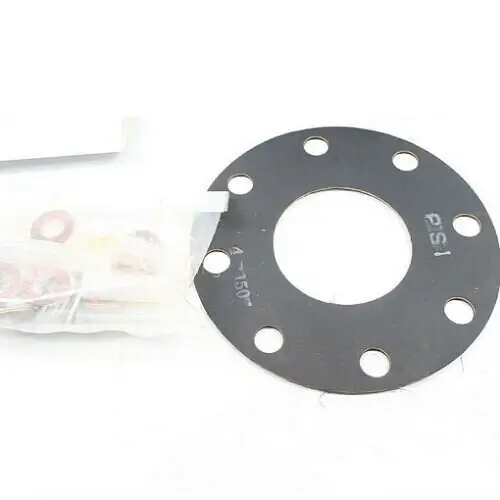
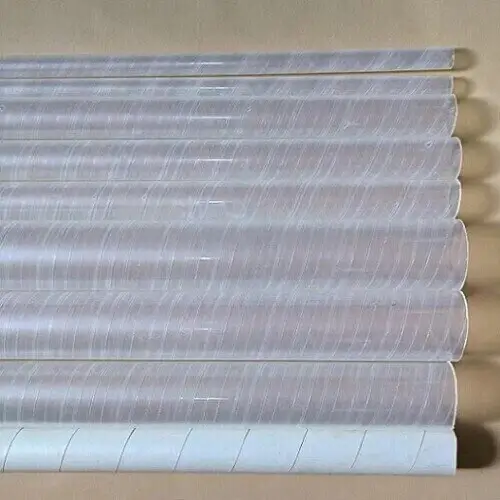
The solution is a flange insulating gasket designed to sit between two flange faces and interrupt the metallic path. These gaskets are typically made from high-pressure laminate with a low moisture absorption rate, glass-reinforced epoxy, phenolic, or PTFE-based materials. The facing may include a serrated metal core or an elastomeric sealing element, depending on operating temperature and pressure. They are engineered to maintain dielectric strength even after bolt-up. At Ningbo Kaxite Sealing Materials Co., Ltd., flange insulating gaskets are manufactured to ASME B16.20, API 6A, and NACE SP0169 requirements, with custom dimensions available to fit raised-face, flat-face, and RTJ flanges.

| Parameter | Typical Specification |
|---|---|
| Core material | G10, G11, phenolic, PTFE, neoprene-faced phenolic |
| Temperature range | -50°C to 260°C depending on material |
| Pressure class | Class 150 to Class 2500 |
| Dielectric strength | ≥15 kV/mm for most laminate grades |
| Applicable standards | ASME B16.20, API 6A, NACE SP0169, ISO 10423 |
A project engineer for a new LNG terminal specifies full cathodic protection for every flanged connection. The budget is tight, so someone suggests using only gaskets. Months later, the CP system readings are unstable because the bolts are still carrying current around the gasket.
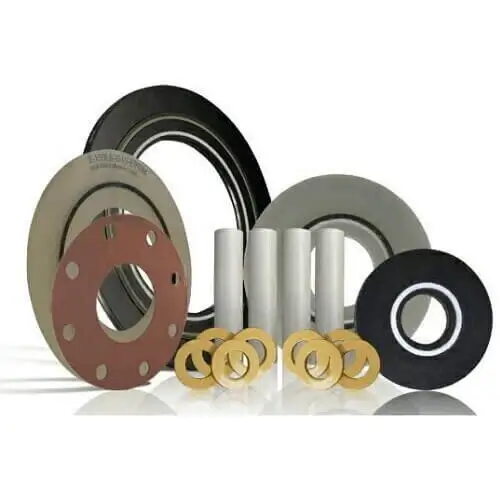
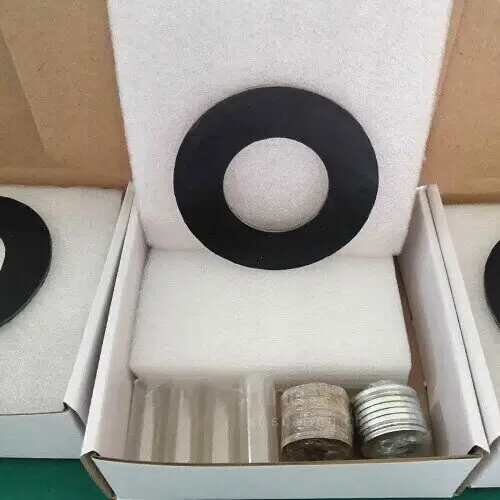
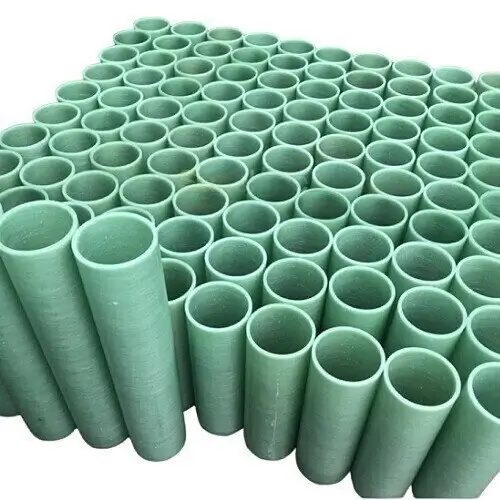
A flange isolation kit solves this by including all components required to electrically isolate the complete flanged joint: one insulating gasket, one set of insulating bolt sleeves, insulating washers, and steel backup washers. Some kits also include a gasket retainer or a one-piece insulating sleeve and washer combination. This assembly blocks current through the flange faces and through the stud bolts, ensuring total isolation. Ningbo Kaxite Sealing Materials Co., Ltd. supplies Type D, Type E, and Type F kits according to ASME B16.48 and API 6A to match raised-face, flat-face, and RTJ flanges, with full-length or half-length sleeves based on service conditions.
| Kit Component | Function | Common Materials |
|---|---|---|
| Insulating gasket | Blocks current between flange faces | Phenolic, G10, PTFE, neoprene-faced phenolic |
| Insulating sleeve | Prevents bolt-to-flange contact | Mylar, Nomex, PTFE, phenolic |
| Insulating washer | Isolates bolt head/nut from flange | Phenolic, PTFE, Mylar |
| Steel washer | Protects insulating washer from crushing | Zinc-plated carbon steel, 316 stainless |
| Gasket retainer | Centers gasket during installation | Phenolic, carbon steel |
A procurement officer receives two quotes: one for $900 gaskets only, another for $2,400 isolation kits. The lower price looks attractive, but the piping standard requires complete electrical isolation. Choosing the wrong option leads to a non-compliant installation and costly rework.
Understanding the difference comes down to scope of supply and failure prevention. A gasket alone may stop direct flange face contact, but it cannot stop bolt conductivity. An isolation kit provides a redundant isolation path that meets cathodic protection and NACE requirements. The table below highlights the differences so you can quickly identify what your project needs.
| Feature | Flange Insulating Gasket | Flange Isolation Kit |
|---|---|---|
| Scope of supply | One gasket only | Gasket + sleeves + washers + steel washers |
| Electrical isolation face | Yes | Yes |
| Bolt isolation | No | Yes |
| Components included | 1 | 5 or more |
| Best for | Replacement, low-risk joints, already insulated bolts | New installation, CP systems, buried pipelines, dissimilar metals |
| Typical standards | ASME B16.20, API 6A | ASME B16.48, API 6A, NACE SP0169 |
| Installation time | Lower | Slightly higher due to multiple components |
| Failure risk | Higher if bolts conduct current | Lower, redundant isolation path |
A water utility team is replacing corroded gaskets on an above-ground piping system that was originally installed without cathodic protection. They wonder if they need full kits or just gaskets. One wrong choice could mean another repair cycle in two years.
Use a flange insulating gasket when the flanged joint is not exposed to cathodic protection current, when the bolts are already insulated, or when the specification allows partial isolation for low-risk applications. Use a full flange isolation kit for buried or submerged pipelines, CP systems, dissimilar metal flanges, instrument connections, and any installation where a single metallic path can compromise the entire corrosion control system. Ningbo Kaxite Sealing Materials Co., Ltd. offers free technical review to help you decide quickly based on flange size, pressure class, and service environment.
| Application | Recommended Product | Reason |
|---|---|---|
| Replacement gasket on non-CP above-ground line | Flange insulating gasket | Lower cost, bolts already isolated or risk is acceptable |
| New buried pipeline with cathodic protection | Flange isolation kit | Full electrical isolation required by NACE SP0169 |
| Dissimilar metal flange connection | Flange isolation kit | Blocks galvanic current through both faces and bolts |
| Instrument isolation flange | Flange isolation kit | Prevents stray current interference with instrument signals |
| RTJ flange in high-pressure service | Flange isolation kit with RTJ gasket | Maintains pressure integrity while isolating |
Q: What is the difference between flange insulating gaskets and isolation kits?
A: A flange insulating gasket is a single sealing element that sits between flange faces to interrupt electrical continuity. An isolation kit includes the gasket plus insulating sleeves, washers, and hardware to isolate the bolts and the entire flanged assembly, ensuring no stray current bypasses the seal.
Q: What is the difference between flange insulating gaskets and isolation kits when upgrading a cathodic protection system?
A: In a CP retrofit, using only a gasket often leaves a current path through the bolts. A full isolation kit blocks both the flange face and bolt path, which is essential to meet NACE SP0169 requirements and prevent accelerated corrosion on the pipeline.
A supply chain manager in Houston needs 40 DN200 PN16 isolation kits with full-length sleeves and PTFE washers for a project in the Middle East. Three suppliers quote, but only one can provide material traceability, hydro-test reports, and the correct sleeve thickness. Delays cost $5,000 per day.
Ningbo Kaxite Sealing Materials Co., Ltd. specializes in manufacturing flange insulation gasket kits and sealing materials for global pipeline projects. We match any flange standard—ASME, EN, JIS, GOST—and supply custom dimensions with full documentation. Our in-house machining and testing allow us to ship most orders within 7–15 days, helping you avoid project downtime. Every kit is packaged with clear part identification, and our engineers review your drawing before production to catch potential fit issues early.
| Common Procurement Pain Point | Kaxite Solution | Benefit |
|---|---|---|
| Wrong sleeve thickness or missing components | Pre-production drawing review and kit checklist | No installation delays or rejects |
| Unclear material requirements | Free material selection based on chemical, temperature, and pressure | Longer service life, fewer failures |
| Mixed flange standards on one project | Custom kits for ASME, EN, JIS, and GOST | One supplier for all flanges |
| Long lead times from other vendors | Domestic stock for common sizes, 7–15 day production | Keeps your project on schedule |
| No traceability or test reports | Material certs, dielectric test reports, and hydro-test data | Full compliance with QA/QC requirements |
Have a flange drawing, data sheet, or project specification? Send it to our engineers and we will recommend the correct gasket or kit within 24 hours. If you are still unsure what is the difference between flange insulating gaskets and isolation kits for your specific service, our technical team will walk you through the selection process step by step. Ningbo Kaxite Sealing Materials Co., Ltd. is a China-based manufacturer and exporter specializing in flange insulation gasket kits, cathodic protection sealing components, and high-performance gaskets. Learn more at https://www.flange-insulation-gasket-kits.com or contact our technical sales team at [email protected]. We respond within one business day with pricing, lead times, and technical data.
Shukla, P. K., & Huda, Z. (2019). Corrosion protection of pipelines using flange insulation kits. Journal of Pipeline Engineering, 18(3), 145–152.
NACE International. (2020). Control of External Corrosion on Underground or Submerged Metallic Piping Systems. NACE SP0169-2020.
American Society of Mechanical Engineers. (2019). Nonmetallic Flat Gaskets for Pipe Flanges. ASME B16.20-2019.
American Petroleum Institute. (2018). Wellhead and Christmas Tree Equipment. API 6A, 21st edition.
Zhang, L., Chen, Y., & Liu, W. (2021). Electrical isolation performance of phenolic laminate gaskets in cathodic protection systems. Corrosion Engineering, Science and Technology, 56(4), 312–320.
Brown, R. D. (2017). Failure analysis of flange isolation kits in wet CO2 service. Materials Performance, 56(7), 44–48.
Kim, J. H., & Park, S. W. (2020). Effect of moisture absorption on dielectric strength of G10 flange insulating gaskets. Journal of Materials Engineering and Performance, 29(8), 5312–5319.
European Committee for Standardization. (2016). Flanges and their joints – Gaskets for PN-designated flanges – Part 1: Non-metallic flat gaskets with or without inserts. EN 1514-1.
Mandal, S., & Singh, R. (2018). Stray current corrosion in buried pipelines and mitigation using insulation joints. International Journal of Pressure Vessels and Piping, 165, 112–121.
International Organization for Standardization. (2021). Petroleum and natural gas industries – Drilling and production equipment – Wellhead and christmas tree equipment. ISO 10423:2021.
-