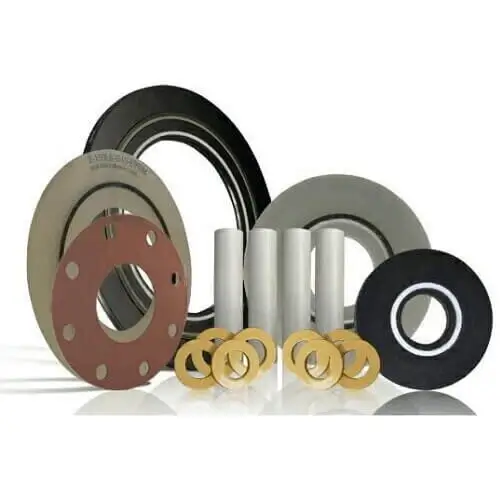
A Flange Insulating Sealing Gasket with a Rectangular Seal Element and Near Zero m & y Factors
Flange insulating sealing gaskets are used to solve the sealing and insulating problems of flanges, and to control losses due to corrosion and leakage of pipelines. They are widely used to seal flanges and control stray electric currents in piping at oil, gas, water, refinery, and chemical plants, to increase the effectiveness of cathodic protection systems.
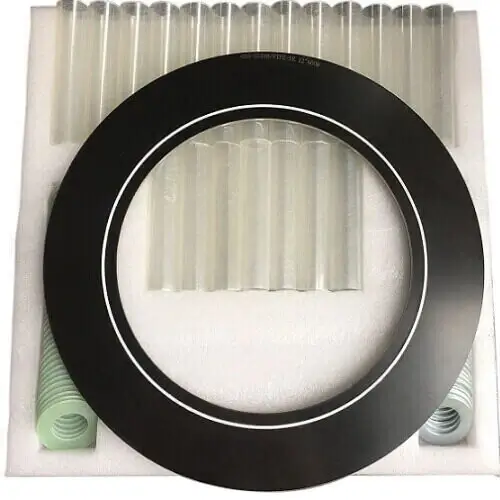
The KXT-110 flange insulating gasket uses a rectangular sealing element enclosed into a unique groove to seal and isolate all types of flanges. This design provides theoretical near zero m and y factors — a positive seal without the excessive bolt loads required with flat gaskets.
A flange insulating sealing gasket — KXT-110 series — is a gasket that seals a bolted flange joint while electrically isolating the two flanges from each other at the same time. Flange insulating sealing gaskets are used to solve the sealing and insulating problems of flanges, and to control losses due to corrosion and leakage of pipelines. They are widely used to seal flanges and control stray electric currents in piping at oil, gas, water, refinery, and chemical plants, to increase the effectiveness of cathodic protection systems.
The KXT-110 flange insulating gasket uses a rectangular sealing element enclosed into a unique groove to seal and isolate all types of flanges. This kind of gasket can provide theoretical near zero m and y factors, resulting in effecting a positive seal without the excessive bolt loads required with flat gaskets. Materials such as Teflon and Viton also can be used as the sealing element, which increases the choice of material.
The KXT-110 flange insulating sealing gasket is supplied in two standard flange-facing geometries — Type E (full-face) and Type F (ring-type) — so the same sealing element design can be matched to raised-face and full-face flange joints in one product family.
On a conventional flat gasket, the bolt load has to develop enough seating stress (the y factor) to initially seat the gasket, and enough maintenance stress (the m factor) to keep it sealed under pressure. Because a flat gasket needs a high bolt load to develop both, the flange and bolts are stressed more heavily and the joint is at greater risk of over-compression, especially on large-diameter flanges or in vibration service.
Because the KXT-110 rectangular sealing element is enclosed in a unique groove, the seal is achieved without the excessive bolt loads required with flat gaskets. This has three practical benefits: lower flange stress, lower bolt stress and a lower risk of over-compression at the joint — especially on large-diameter flanges and in vibration or thermal-cycling service.
The KXT-110 flange insulating sealing gasket is available in two standard flange-facing geometries. The geometry is set by the flange type, not by the sealing element — so the same rectangular sealing element can be supplied as Type E or Type F depending on the flange.
Type E Full Face KXT-110 Gasket
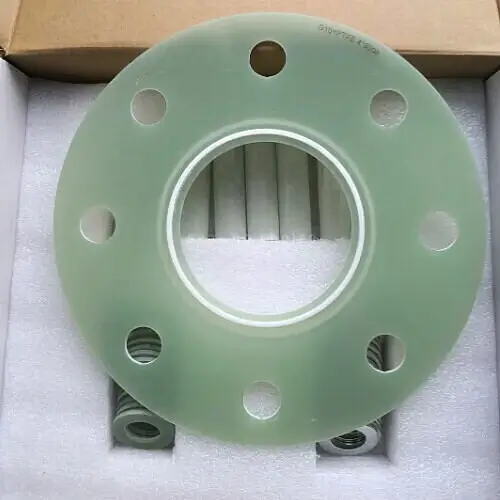
Type E (full face) gaskets have the same outside diameter as the flange and precisely located bolt holes. This feature helps to automatically center the gasket and offers maximum protection against foreign material shorting out the flange.
| Feature | Value |
|---|---|
| Outside Diameter | Same as flange |
| Bolt Holes | Precisely located, full bolt circle |
| Centering | Self-centering by bolt holes |
| Shorting Protection | Maximum |
| Recommended For | Full-face and raised-face flanges |
Type F Ring Type KXT-110 Gasket
Type F (ring type) gaskets are made to fit within the bolt hole circle of the flange. The O.D. of the gasket extends out to the I.D. of the bolt hole circle for good protection against foreign material shorting out the flange.
| Feature | Value |
|---|---|
| Outside Diameter | To the I.D. of the bolt hole circle |
| Bolt Holes | No bolt holes |
| Centering | Centered between the bolts |
| Shorting Protection | Good |
| Recommended For | Raised-face flanges |
The KXT-110 uses a rectangular sealing element as standard. Materials such as Teflon and Viton also can be used as the sealing element, which increases the choice of material. EPDM and neoprene are available for water-based and general service applications. The correct sealing element depends on the process fluid, the operating temperature and the required chemical resistance.
Rectangular Seal
Standard rectangular sealing element enclosed into a unique groove. Provides theoretical near zero m and y factors.
Teflon
Excellent corrosion and temperature resistance. Selected for aggressive chemical and high-temperature service.
Viton
Excellent resistance to aliphatic hydrocarbons, glycols and H2S. Selected for oil, fuel and hydrocarbon service.
EPDM / Neoprene
EPDM for water and steam service. Neoprene for water and wastewater service. Both with good weathering resistance.
The table below defines the fit and function of the KXT-110 flange insulating sealing gasket. Confirm the exact flange size, pressure class, gasket type (E or F), sealing element material and kit scope on the enquiry — custom gaskets to drawing are accepted.
m and y factors
Positive Seal Without High Bolt Load
The rectangular sealing element in its unique groove provides theoretical near zero m and y factors, so a positive seal is achieved without the excessive bolt loads required with flat gaskets. Lower bolt load means lower flange stress and lower bolt stress at the joint.
Wider Choice of Sealing Element
The KXT-110 groove design accepts a rectangular seal element as standard, and also accepts Teflon, Viton, EPDM and neoprene sealing elements. The correct material can be matched to each process fluid and operating temperature without changing the retainer.
Type E Self-Centering Full-Face Geometry
Type E gaskets have the same outside diameter as the flange and precisely located bolt holes. This feature automatically centers the gasket during installation and offers maximum protection against foreign material shorting out the flange.
Type F Ring-Type Geometry for Raised Face
Type F gaskets are made to fit within the bolt hole circle. The OD extends out to the ID of the bolt hole circle for good protection against foreign material shorting out the flange. No bolt holes — the gasket centers between the bolts and installs easily.
Stray Current Control
Flange insulating sealing gaskets control stray electric currents in piping at oil, gas, water, refinery, and chemical plants, which increases the effectiveness of cathodic protection systems and reduces the risk of galvanic corrosion at dissimilar metal joints.
Corrosion and Leakage Loss Control
By solving the sealing and insulating problems of flanges at the same time, the KXT-110 gasket controls losses due to corrosion and leakage of pipelines — reducing downtime, repair cost and product loss.
The KXT-110 flange insulating sealing gasket is used wherever a bolted flange joint must be sealed and electrically isolated at the same time — for cathodic protection, galvanic corrosion protection, and stray current control in water, gas, oil and petrochemical pipeline systems.
Oil Pipelines
Crude oil, fuel and hydrocarbon pipelines where the joint must be sealed and electrically isolated at the same time.
Gas Transmission
Gas transmission and distribution lines where isolation joints are required at regular intervals for corrosion control.
Water Pipelines
Large-diameter water and wastewater transmission mains where the flange joint must be isolated to protect the pipeline coating.
Refineries
Process piping, heat exchanger nozzles and vessel connections where dissimilar metals meet at a bolted flange joint.
Chemical Plants
Chemical process piping where the flange joint must be sealed and electrically isolated, and where the sealing element must resist aggressive chemicals.
Cathodic Protection Systems
Buried or submerged pipelines where the cathodic protection system must be isolated from the next pipeline section.
Dissimilar Metal Joints
Where a carbon steel flange is bolted to a stainless steel, brass or cast iron flange — the gasket breaks the galvanic circuit.
Stray Current Control
Piping systems where stray electric currents must be controlled to protect the pipeline and the connected equipment.
What are flange insulating sealing gaskets?
Flange insulating sealing gaskets are gaskets used to solve the sealing and insulating problems of flanges, and to control losses due to corrosion and leakage of pipelines. They are widely used to seal flanges and control stray electric currents in piping at oil, gas, water, refinery and chemical plants, to increase the effectiveness of cathodic protection systems. The KXT-110 flange insulating gasket uses a rectangular sealing element enclosed in a unique groove to seal and isolate all types of flanges.
What does near zero m and y factors mean for the KXT-110 gasket?
In gasket design, the m factor is the maintenance factor and the y factor is the minimum seating stress. A flat gasket needs a high bolt load to develop enough seating stress (y) and to maintain the seal under pressure (m). The KXT-110 rectangular sealing element in its unique groove provides theoretical near zero m and y factors, so a positive seal is achieved without the excessive bolt loads required with flat gaskets. Lower bolt load means less flange stress and less risk of over-compression at the joint.
What is the difference between Type E and Type F KXT-110 gaskets?
Type E (full-face) gaskets have the same outside diameter as the flange and precisely located bolt holes. This helps to automatically center the gasket and offers maximum protection against foreign material shorting out the flange. Type F (ring-type) gaskets are made to fit within the bolt hole circle of the flange, with the outside diameter extending out to the inside diameter of the bolt hole circle for good protection against foreign material shorting out the flange.
What sealing element materials are available for the KXT-110 gasket?
The KXT-110 flange insulating gasket uses a rectangular sealing element as standard. Materials such as Teflon and Viton can also be used as the sealing element, which increases the choice of material. EPDM and neoprene are also available for water-based and general service applications. The correct sealing element depends on the process fluid, the operating temperature and the required chemical resistance.
Where are KXT-110 flange insulating sealing gaskets used?
KXT-110 flange insulating sealing gaskets are used wherever flanges must be sealed and electrically isolated at the same time. Typical applications include oil, gas and water pipelines, refineries, chemical plants, cathodic protection systems on buried or submerged pipelines, and dissimilar metal joints where galvanic corrosion must be prevented. They are selected where the gasket must seal without the excessive bolt loads required by flat gaskets.
What is included in a KXT-110 flange insulating sealing gasket kit?
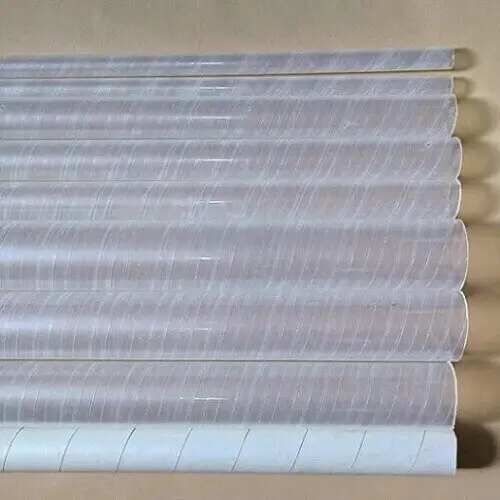
The KXT-110 flange insulating sealing gasket is normally supplied as a complete kit including the central gasket with its rectangular sealing element, one insulating sleeve per bolt, two insulating washers per bolt, and two plated steel washers per bolt. Together these components break every electrical path through the flange joint — across the flange faces, through the bolt holes and around the bolts.
Send us your specification — we reply within 24 hours
Tell us the flange size, the pressure class, the gasket type (Type E full-face or Type F ring-type), the sealing element material (rectangular seal, Teflon, Viton, EPDM or neoprene), the standard and the quantity. If you are not sure whether the KXT-110 or a standard flat flange insulation gasket is the correct choice for your joint, send us the flange drawing and the process conditions and we will match the correct gasket.
Address
No 432 Zhenhai Middle Road, Luotuo Street, Zhenhai District, Ningbo City, Zhejiang China
Tel