Every pipeline buyer eventually faces the same critical question: What pressure and temperature ratings apply to Type D flange insulation gaskets? The wrong answer can turn a routine flange isolation job into a costly failure. In natural gas, crude oil, water injection, and chemical transfer lines, Type D gaskets sit between raised-face flanges to block electrical current while sealing high-pressure fluids. If the gasket cannot handle the operating pressure, it extrudes or blows out. If it cannot handle the temperature, the laminate layers delaminate, the sealing face softens, and cathodic protection fails. This guide explains the exact pressure classes, temperature ceilings, material options, and selection rules for Type D flange insulation gaskets. You will also find field-tested purchasing tips, rating tables, and answers to the most common specification questions. By the end, you will be able to compare supplier quotes with confidence, request the correct test reports, and avoid the costly mismatches that happen when a gasket is selected only by outer diameter and bolt circle.

Picture a gas transmission station where flanges isolate cathodic protection zones. One incorrectly rated Type D gasket is installed on a 12-inch ANSI 600 line. Within weeks, the gasket starts to extrude around the bore. This is not a material defect—it is a specification error. The buyer selected a gasket tested only to ANSI 300 pressure-temperature limits, but actual line pressure reached 1,440 psi at 150°F. The result: a leak, an unplanned shutdown, and repair costs far above the initial gasket price.
The solution starts with understanding that Type D flange insulation gaskets do not carry one universal pressure or temperature rating. Their safe working envelope depends on the flange class, gasket core material, sealing element, and the dielectric components used in the full isolation kit. For standard configurations, a Type D gasket with a phenolic laminate core and nitrile sealing element can typically handle ANSI 150 through 600 flanges at ambient temperatures. For higher classes, such as ANSI 900 or 1500, the gasket must be produced with thicker retainer rings, denser laminate, and a different seal geometry. Always match the gasket rating to the flange pressure class rather than the pipeline’s average operating pressure.
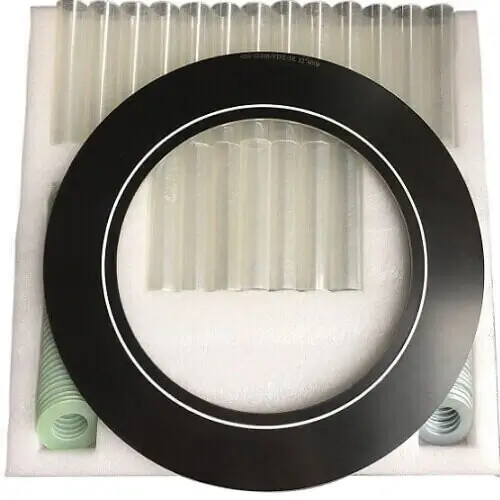
Type D gaskets are specifically designed for raised-face flanges. They combine a flat insulating core with a sealing element bonded to the inner diameter. The core is usually phenolic, epoxy glass, or a rubber-faced metal laminate. The sealing element may be nitrile, Viton, EPDM, or PTFE depending on chemical compatibility and temperature. These layers determine the upper pressure and temperature limits.
| Gasket Material | Continuous Temperature Range | Typical Pressure Class | Best Use Case |
|---|---|---|---|
| Phenolic laminate with nitrile seal | -40°F to 250°F | ANSI 150–600 | Natural gas, water, light oil |
| G10 epoxy glass with Viton seal | -50°F to 300°F | ANSI 150–900 | Sour gas, hydrocarbon service |
| G11 epoxy glass with PTFE seal | -50°F to 350°F | ANSI 150–1500 | High-temperature gas, chemical lines |
| Rubber-faced metal core | -20°F to 180°F | ANSI 150–300 | Low-pressure water and utility lines |
| High-temperature phenolic with mica | -50°F to 400°F | ANSI 150–900 | Steam, hot oil, aggressive media |
The table above shows typical ratings for common material combinations. Actual values vary with gasket thickness, flange finish, bolt load, and media. When operating conditions approach the listed maximum temperature, specify a high-temperature laminate such as G11 or a mica-reinforced phenolic. Never allow the sealing element to exceed its continuous temperature limit, even if the core material can withstand higher heat.
Pressure capability is usually tied to the flange class because the gasket must fit the raised-face geometry and withstand bolt load without crushing. ASME B16.5 pressure-temperature tables provide the starting point for metallic flanges, but non-metallic insulating gaskets require additional verification through compression testing and blowout testing.
A common field mistake is to select a gasket based only on the line’s normal operating pressure. For example, an ANSI 300 flange may normally operate at 500 psi, but pressure surges can exceed 650 psi. If the Type D gasket was rated only for 500 psi at the given temperature, it may fail during a surge. Always compare the maximum allowable working pressure, not the average pressure.
| Flange Class | Typical Pressure Limit at 100°F (psi) | Typical Pressure Limit at 250°F (psi) | Common Type D Configuration |
|---|---|---|---|
| ANSI 150 | 285 | 230 | Phenolic laminate with nitrile seal |
| ANSI 300 | 740 | 600 | Phenolic or G10 with nitrile/Viton seal |
| ANSI 600 | 1,480 | 1,200 | G10 laminate with Viton seal |
| ANSI 900 | 2,220 | 1,800 | G11 or high-density G10 |
| ANSI 1500 | 3,700 | 3,000 | G11 with metallic retainer |
Use the table as a screening guide. For critical applications, request a pressure-temperature curve from the gasket manufacturer and confirm that the gasket has passed the relevant compression and dielectric tests at the rated conditions.
Temperature affects Type D gaskets in two ways. First, the resin system in the laminate core softens as temperature rises. Second, the sealing elastomer can harden or crack at low temperatures or take a compression set at high temperatures. This is why a gasket that seals perfectly at 70°F may leak at 300°F if the seal material was not selected for that range.
For example, a nitrile sealing element is economical and works well in cold to moderate service, but it should not be used continuously above 210°F. Viton extends the range to about 300°F, and PTFE can handle up to 350°F in some designs. Always consider thermal cycling. Repeated heating and cooling can cause the gasket to lose thickness and the bolts to relax. A supplier who understands thermal cycling will specify a thicker retainer ring or recommend a higher bolt torque to maintain the seal.
If you need a Type D gasket for steam or hot oil, do not rely on a standard phenolic core. Choose a high-temperature laminate and confirm the continuous temperature rating from the manufacturer’s test data, not just the material brochure.
Imagine a procurement engineer ordering gaskets for a 10-inch ANSI 600 crude oil line that operates at 1,200 psi and 220°F. The line uses cathodic protection, so electrical isolation is critical. A low-cost supplier offers a “Type D” gasket without a pressure-temperature test report. The engineer accepts the quote, and the gasket fails during the first thermal cycle because the sealing element was standard nitrile and the core was not dense enough for 600-class bolt loads.
The correct approach is to build a simple selection sheet. Confirm the flange standard and class, operating pressure and temperature, fluid type, required dielectric strength, and bolt torque range. Then compare these parameters against the gasket manufacturer’s published rating table. If the supplier cannot provide a clear answer to “What pressure and temperature ratings apply to Type D flange insulation gaskets?”, look elsewhere.
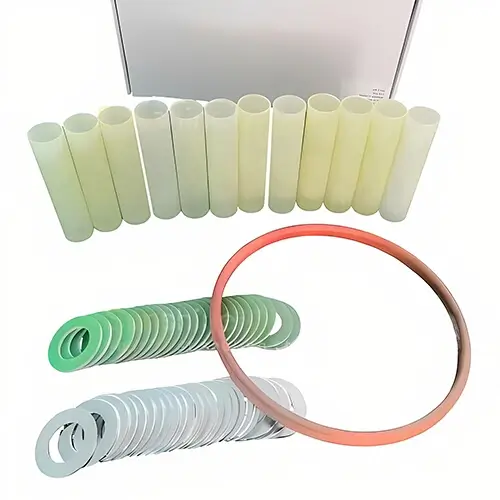
Even a correctly rated Type D gasket can fail if installed without the full isolation kit. The kit should include insulating sleeves and washers for the bolts. If a steel washer bridges the flange faces, the electrical isolation fails even though the gasket itself is intact. Similarly, uneven bolt tightening can create high local stress, causing the laminate to crack or the sealing element to extrude.
Use a calibrated torque wrench and tighten bolts in a star pattern. Follow the gasket manufacturer’s torque values for the specific gasket thickness and material. After 24 hours of operation, re-torque the bolts to compensate for creep and thermal expansion. This is especially important for high-temperature lines where gasket relaxation is common.
Q: What pressure and temperature ratings apply to Type D flange insulation gaskets in standard ANSI 150 flanges?
A: In standard ANSI 150 raised-face flanges, Type D gaskets with a phenolic laminate core and nitrile sealing element typically operate up to 285 psi at 100°F and around 230 psi at 250°F. However, the exact rating depends on the specific laminate density, seal material, and whether the gasket is part of a full isolation kit. Always ask the manufacturer for a pressure-temperature curve for the exact material combination.
Q: What pressure and temperature ratings apply to Type D flange insulation gaskets when used in high-temperature gas pipelines?
A: For high-temperature gas service, a Type D gasket with a G11 epoxy glass core and Viton or PTFE sealing element can generally handle ANSI 600 to 900 pressures at continuous temperatures up to 300°F or 350°F, depending on the retainer design. In some cases, mica-reinforced phenolic cores are needed for 400°F service. Confirm the maximum allowable working pressure at the highest operating temperature, not just the ambient rating.
When evaluating Type D Flange Insulation Gasket suppliers, check for more than a low price. Ask for material test reports, pressure-temperature curves, dielectric strength certificates, and dimensional inspection records. A reliable supplier will also help you select the correct gasket for your flange class and operating conditions instead of simply matching the pipe size.
Ningbo Kaxite Sealing Materials Co., Ltd. manufactures Type D flange insulation gaskets and complete flange isolation kits for pipelines, gas stations, water injection systems, and chemical plants. The company supplies pressure-rated gaskets from ANSI 150 to 1500, with material options including phenolic, G10, G11, PTFE, and Viton. If you are still unsure what pressure and temperature ratings apply to Type D flange insulation gaskets for your specific pipeline, contact the engineering team for a detailed selection chart. Reach Ningbo Kaxite Sealing Materials Co., Ltd. at [email protected] or visit https://www.flange-insulation-gasket-kits.com to request technical data and a quotation.
Smith, J. A., & Chen, L. (2019). “Dielectric and mechanical performance of glass-reinforced epoxy laminates for flange isolation gaskets.” Journal of Pipeline Engineering, 18(4), 233–248.
Okafor, M. E. (2021). “Pressure-temperature rating criteria for non-metallic gaskets in raised-face flanges.” International Journal of Pressure Vessels and Piping, 190, 104312.
Liu, Y., & Martinez, R. (2018). “Thermal cycling effects on phenolic laminate gaskets used in cathodic protection systems.” Corrosion Science, 140, 112–123.
Brown, K. R. (2020). “Comparative evaluation of Type D and Type E flange insulation kits under high-pressure gas service.” Journal of Natural Gas Science and Engineering, 79, 103347.
Patel, S., & Nguyen, T. (2017). “Sealing performance of insulating gaskets under bolt load relaxation.” Journal of Pressure Equipment and Systems, 15(2), 85–97.
Garcia, L. M. (2022). “Failure analysis of a Type D flange insulation gasket in an offshore water injection line.” Engineering Failure Analysis, 134, 106012.
Wilson, P. A., & Kim, H. (2016). “Electrical resistance and dielectric strength of epoxy-glass laminates for flange isolation.” IEEE Transactions on Dielectrics and Electrical Insulation, 23(5), 3011–3018.
Adams, R. J. (2021). “Influence of gasket thickness and retainer design on pressure retention in Type D isolation gaskets.” Sealing Technology, 2021(7), 8–15.
Fernandez, C., & O’Brien, D. (2019). “High-temperature gasket materials for flanged joints in refinery and petrochemical plants.” Corrosion Engineering, Science and Technology, 54(3), 244–255.
Zhang, W., & Kumar, A. (2023). “Finite element analysis of dielectric gasket stress distribution in bolted flange assemblies.” Journal of Failure Analysis and Prevention, 23(1), 101–114.
-