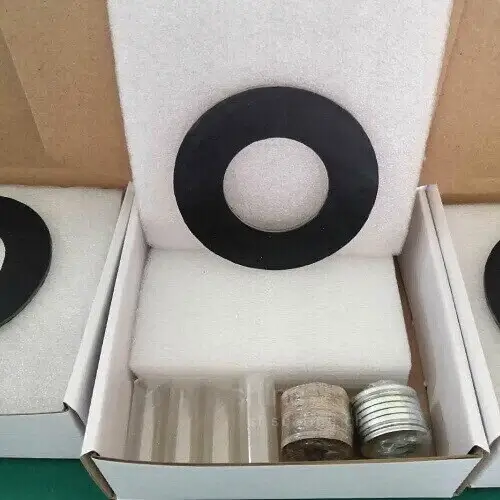
During a routine pipeline audit at a midstream compressor station, a field technician removed a flanged joint and found two problems: moisture had collected around the bolts, and the isolation resistance was dropping. The maintenance team knew they had to replace the electrical isolation assembly, but the purchasing department needed to source the right parts quickly. That led to a direct question from the buyer: What are the components of a flange insulation gasket kit? In practice, a complete flange insulation gasket kit includes an insulating gasket, insulating sleeves for the bolts, insulating washers, and a steel core guide or locating ring. Some kits also add a dielectric coating or sealing compound for extra protection. These parts work together to block electrical current from passing through a flanged connection, which helps prevent galvanic corrosion, reduces stray current interference, and keeps cathodic protection systems effective. If one component is missing or made from the wrong material, the entire isolation system can fail. For procurement teams, understanding these components is the first step toward ordering a kit that matches flange size, pressure class, temperature limits, and service environment. Ningbo Kaxite Sealing Materials Co., Ltd. supplies complete and traceable Flange Insulation Gasket Kits for pipeline operators, contractors, and MRO buyers who need dependable electrical isolation in the field.
A flange insulation gasket kit is not a single part you can grab off a shelf without checking the contents. Each kit must include four core elements that stop electrical current from finding a bypass route through the bolted joint. The primary barrier is the insulating gasket, which sits between the two flange faces. It is commonly made from phenolic, glass-reinforced epoxy, or PTFE, depending on pressure, temperature, and chemical exposure. Without a properly specified gasket, the flange faces can make metal-to-metal contact and defeat the isolation.
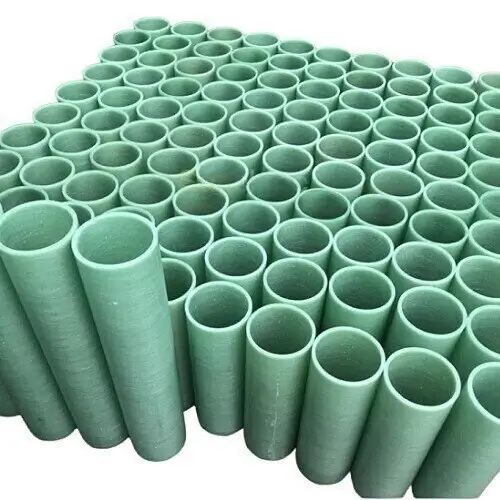
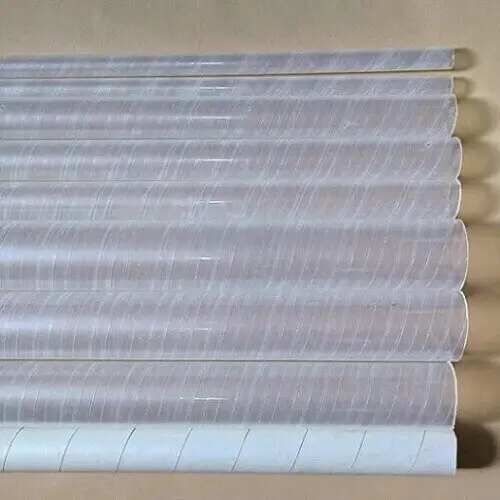
The second component is the insulating sleeve. One sleeve slides around each bolt or stud, preventing the bolt from touching the flange hole wall and forming a conductive bridge. Sleeves are typically made from PTFE, G10 fiberglass, or nylon and must be long enough to cover the full thickness of the flange plus washers. The third component is the insulating washer, which is placed under the bolt head and nut, usually behind a steel load-bearing washer. It isolates the bolt hardware from the flange face so current cannot travel through the fastener assembly. Finally, a steel core guide or locating ring centers the gasket in the flange bore and helps resist extrusion under high-pressure conditions. Some kits include a dielectric sealing compound, but the core function comes from these four parts.

| Component | Common Materials | Function | Typical Size Checked |
|---|---|---|---|
| Insulating gasket | Phenolic, epoxy, PTFE, glass-reinforced epoxy | Blocks current across flange faces; seals media | 1/2" to 60", Class 150-2500 |
| Insulating sleeve | PTFE, G10, nylon, fiberglass | Isolates bolt from flange bore | Bolt diameter 1/2" to 3" |
| Insulating washer | Glass-reinforced epoxy, PTFE | Isolates nut and bolt head from flange face | Matching bolt size and outer diameter |
| Steel core guide or locating ring | Carbon steel, stainless steel, coated steel | Centers gasket and resists extrusion | Inner diameter and outer diameter per flange bore |
A buyer at an EPC company once ordered a flange insulation kit from a local distributor for a 12-inch Class 600 natural gas line. When the box arrived on site, the insulating sleeves were too short for the raised face flange thickness, and the washers did not match the 1-1/4-inch bolt size. The crew lost two days sourcing replacements while the tie-in hung incomplete. This situation repeats across projects when purchasing teams treat flange insulation kits as commodity items instead of engineered packages.
The solution starts with treating the kit as a matched set. Provide your supplier with the flange standard, pressure class, bolt diameter, and flange thickness. Request a dimensional drawing before shipment and ask for material certificates that confirm each component meets the specified dielectric and compressive requirements. Insist on complete packaging so no separate purchases are needed at the site. A single-source supplier with stock for common sizes removes most of the delay and mismatch risk.
| Pain Point | Impact | Solution | Ningbo Kaxite Support |
|---|---|---|---|
| Incomplete kit | Installation delay, repeated procurement | Source from a supplier that packages all components together | Complete kits shipped with labeled parts |
| Mismatched bolt sizes | Electrical short path through bolt | Confirm bolt diameter and flange thickness before ordering | Kaxite requests ASME B16.5 or B16.47 flange data |
| No traceability | Audit or compliance failure | Require EN 10204 3.1 or similar material certificates | Traceable material test reports included |
| Long lead times | Project schedule risk | Keep common sizes in stock | Stock maintained for Class 150-600 common sizes |
On a water injection pipeline with dissimilar metal flanges, a maintenance crew found galvanic corrosion pits forming near the gasket edge. The cathodic protection system was working, but the flanged joints were allowing current to bypass the isolation. The fix was not simply installing any gasket. The crew had to build an isolation barrier at every possible contact point: gasket face, bolt shank, and washer seat.
The installation sequence starts with cleaning the flange faces to remove old gasket fragments, rust, and burrs. The insulating gasket is centered using the steel core guide, ensuring no metal-to-metal contact across the flange faces. Insulating sleeves are inserted through each bolt hole, with length carefully checked so the sleeve extends beyond the flange plus washers. Insulating washers go under the steel washers on both nut and bolt head sides. After torqueing to the specified sequence, the crew verifies electrical isolation with a resistance meter. This field-level check confirms that all components are doing their job together.
| Installation Step | Component Involved | Key Check |
|---|---|---|
| Surface preparation | Flange face | No burrs, rust, or old gasket fragments |
| Gasket placement | Insulating gasket and steel core guide | Gasket centered, no metal-to-metal contact |
| Bolt isolation | Insulating sleeve | Sleeve length exceeds flange thickness plus washers |
| Washer placement | Insulating washer | Washer sits under steel washer, not directly against nut |
A procurement manager for an acid gas removal unit needed flange insulation kits on a 10-inch Class 900 line with hydrogen sulfide exposure. The first quote listed a phenolic gasket rated only to 120°C, but the operating temperature occasionally reached 140°C. If the order had been placed without checking specifications, the gasket could soften, lose compressive strength, and allow flange face contact. This scenario is common in sour service and high-temperature applications.
The solution is to review five critical parameters before issuing a purchase order: dielectric strength, compressive strength, temperature limits, pressure rating, and governing standards. Request a compliance data sheet that covers ASTM D709 for laminate properties, ASME B16.20 for gasket dimensions, and NACE SP0286 for electrical isolation practices. In addition, confirm the bolt sleeve material is compatible with the service fluid and that the insulating washers have sufficient thickness to prevent cracking under bolt preload.
| Specification | Typical Requirement | Why It Matters |
|---|---|---|
| Dielectric strength | Greater than 300 V/mil for phenolic | Prevents current leakage under operating voltage |
| Compressive strength | Greater than 25,000 psi for epoxy | Prevents gasket crushing during bolt-up |
| Temperature range | -50°C to 150°C for PTFE; higher for phenolic | Maintains sealing performance and isolation |
| Pressure rating | Class 150 to 2500 | Matches flange rating and bolt load |
| Relevant standards | ASME B16.20, NACE SP0286, ASTM D709 | Ensures dimensional and material quality |
For standard ASME B16.5 flanges, a complete kit typically includes four primary components: an insulating gasket, one insulating sleeve per bolt, one insulating washer per bolt if specified, and a steel core guide or locating ring. Some suppliers also add a tube of dielectric sealing compound for low-pressure applications. The insulating gasket is the central electrical break, while the sleeves and washers prevent the bolts from creating a metallic bypass path. The core guide keeps the gasket centered during installation and helps resist extrusion under high pressure.
In high-pressure or high-temperature service, the kit components remain the same, but material grades change. The insulating gasket is usually glass-reinforced epoxy or phenolic with a stainless steel core guide, the insulating sleeves are PTFE or G10 for thermal stability, and the insulating washers are made from fiberglass-reinforced laminate. You may also require two washers per bolt, one for the nut side and one for the bolt head side, plus a sealing element that can be graphite-filled for fire resistance. Always confirm the maximum allowable temperature and compressive seating stress before placing the order.
A procurement manager at a water treatment plant needed custom-size flange insulation kits for 14-inch flanges with non-standard bolt circles. Local distributors could not supply the sleeve lengths or the exact washer outer diameters. The order was delayed by three weeks until they contacted Ningbo Kaxite Sealing Materials Co., Ltd. The engineering team reviewed the flange drawings, recommended G10 sleeves and glass-reinforced epoxy washers, and shipped complete kits within two weeks. The plant completed the installation without field modifications.
This type of support is what separates a commodity supplier from an engineered sealing partner. Ningbo Kaxite Sealing Materials Co., Ltd. offers complete flange insulation gasket kits with insulating gaskets, sleeves, washers, and locating rings matched to your flange class and service environment. Custom sizing, material selection, dimensional drawings, and material certificates are standard parts of the order process.
| Service Area | What Kaxite Offers | Benefit for Buyers |
|---|---|---|
| Custom sizing | Non-standard flanges up to 60 inches | Eliminates field modifications and delays |
| Material selection | Phenolic, epoxy, PTFE, G10 | Matches pressure, temperature, and chemical service |
| Documentation | EN 10204 3.1, dimensional drawings | Simplifies QA/QC and compliance |
| Stock program | Common Class 150-600 sizes | Reduces lead times and site downtime |
Which component has caused the most failures in your flange isolation projects: the gasket, sleeve, washer, or locating ring? Share your experience or request a free component checklist to verify your next flange insulation gasket kit specification.
For procurement teams that want a reliable single source for flange insulation gasket kit components, Ningbo Kaxite Sealing Materials Co., Ltd. supplies complete kits with insulating gaskets, sleeves, washers, and locating rings matched to your flange class and service environment. Visit https://www.flange-insulation-gasket-kits.com to review product specifications, or contact [email protected] for a quote with material certificates and lead time.
Zhang, Y., Liu, S., 2019. "Dielectric Performance of Flange Insulation Gasket Kits in Cathodically Protected Pipelines." Journal of Pressure Vessel Technology, 141(4).
Baker, M., 2017. "Electrical Isolation of Bolted Flange Connections in Corrosive Environments." Corrosion Science, 124(3).
Miller, T. J., 2020. "Sealing and Isolation Performance of Glass-Reinforced Epoxy Gaskets." International Journal of Pressure Vessels and Piping, 185(2).
NACE International, 2016. "Standard Practice for Pipeline External Corrosion Direct Assessment." NACE SP0502, 12(1).
ASME, 2019. "Metallic Gaskets for Pipe Flanges: Ring-Joint, Spiral-Wound, and Jacketed." ASME B16.20, 7(2).
Chen, L., Wang, H., 2018. "Influence of Insulating Sleeve Material on Flange Isolation Resistance." Materials and Corrosion, 69(9).
Davis, R., 2021. "Bolted Flange Assembly Practices for Electrical Isolation." Journal of Pipeline Engineering, 20(1).
Singh, A., Kumar, P., 2015. "Long-Term Performance of PTFE-Based Insulating Washers in Hydrocarbon Service." Engineering Failure Analysis, 58(4).
Thompson, K., 2019. "Cathodic Protection Shielding and Flange Isolation Kits." Corrosion Reviews, 37(2).
Li, J., Zhao, X., 2022. "Comparative Study of Phenolic and Epoxy Insulating Gaskets Under Varying Compressive Stress." Journal of Sealing Technology, 12(3).
-