N
NFG · Flat Isolating GasketNeoprene Faced Phenolic Gaskets — the Standard Flat Isolating Gasket for Oil & Gas
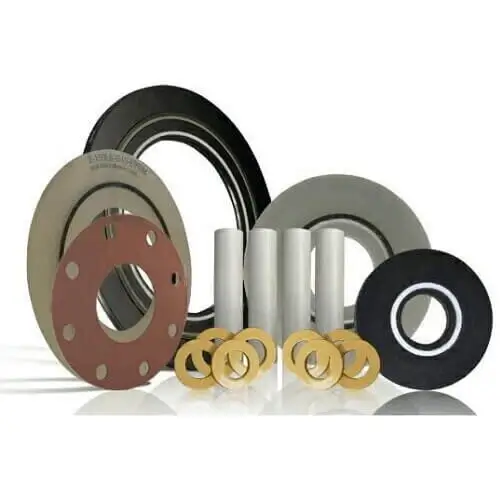
Neoprene Faced Phenolic Gaskets have been used as standard flat isolating gaskets in the oil and gas industries for many years. Soft neoprene rubber sheets are factory applied to both sides of a laminated phenolic retainer, providing an effective sealing surface. The temperature limit of these gaskets is approximately +175 °F (+80 °C).
Because the phenolic retainer carries the bolt load and blocks the electrical current while the soft neoprene facings conform to the flange surface and close the joint at moderate torque, the Neoprene Faced Phenolic Gasket seals and electrically isolates a bolted flange joint at the same time.
Laminated Phenolic Retainer with Factory-Applied Neoprene Facing
Soft neoprene rubber sheets are factory applied to both sides of a laminated phenolic retainer. The phenolic core carries the bolt load and provides the primary dielectric barrier. The neoprene facings conform to the flange surface under bolt load and close the joint at moderate torque, giving an effective sealing surface across the full flange face.
A Neoprene Faced Phenolic Gasket — NFG series — is a flat isolating gasket used to seal a bolted flange joint while electrically isolating the two flanges from each other. Neoprene Faced Phenolic Gaskets have been used as standard "flat" isolating gaskets in the oil and gas industries for many years. Soft neoprene rubber sheets are factory applied to both sides of a laminated phenolic retainer, providing an effective sealing surface.
The temperature limit of these gaskets is approximately +175 °F (+80 °C). Because the retainer is a laminated phenolic plate and both faces are covered with neoprene sheet, the Neoprene Faced Phenolic Gasket gives excellent sealing efficiency on raised-face and full-face flanges — which is why it has been the standard flat isolating gasket in oil and gas service.
The purpose of the Neoprene Faced Phenolic Gasket is to break the electrical circuit between two adjacent flanges. When a carbon steel flange is bolted to a stainless steel, brass or cast iron flange and an electrolyte is present, a galvanic current can flow between the two metals and corrode the more active one. The Neoprene Faced Phenolic Gasket breaks that circuit. The same gasket is also used to control stray electric currents, to electrically split long pipelines into distinctive cathodic protection systems, and to eliminate static loading charge transfer at oil storage terminals.
Neoprene Faced Phenolic Gaskets are used wherever a bolted flange joint must be sealed and electrically isolated at the same time. The five most common application reasons are listed below.
Limit the Extent and Cost of Cathodic Protection Current
To limit the extent and cost of cathodic protection current to only those pipes that need to be protected from the main cathodic protection system.
Electrically Split Long Pipelines
To electrically "split up" long pipelines into distinctive cathodic protection systems, so that each section can be protected with its own current level and reference electrode.
Isolate a Pipeline from Stray Currents
To isolate a pipeline to ensure that cathodic protection or stray electricity currents do not cause increased corrosion, or cause a hazard to personnel or equipment.
Isolate Piping Systems with Dissimilar Metals
To isolate piping systems where dissimilar metals are present — carbon steel bolted to stainless steel, brass or cast iron — so that galvanic corrosion cannot develop at the flange joint.
Eliminate Static Loading Charge Transfer
To eliminate static loading charge transfer in discharge or loading operations at oil storage terminals, reducing the risk of spark discharge during product transfer.
The Neoprene Faced Phenolic Gasket is available in two standard flange-facing geometries. The geometry is set by the flange type, not by the facing material — so the same Neoprene Faced Phenolic construction can be supplied as Type E or Type F depending on your flange.
Type E Full Face Neoprene Faced Phenolic Gasket
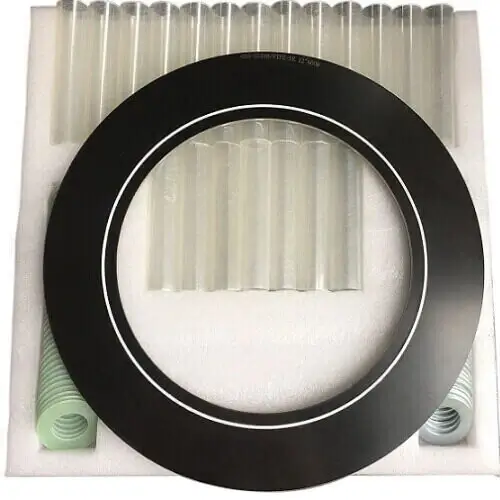
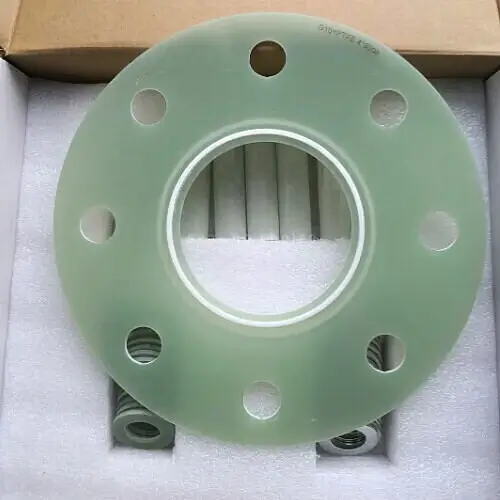
This gasket kit provides complete protection of both flange faces. The gasket has the same outside diameter of flanges. This feature will prevent collection of foreign matter between the flange faces to ensure complete cathodic isolation.
Type F Ring Neoprene Faced Phenolic Gasket
This gasket is manufactured to fit only the raised face surface of the flanges. Outside diameter of the gasket is designed to be slightly less than the inside diameter of the bolt circle. It is recommended that the flanges be wrapped to prevent foreign material from "shorting out" the flanges.
The table below lists the mechanical and electrical properties of the Neoprene Faced Phenolic Gasket and its plain faced phenolic alternative. These values are typical for the standard phenolic grade and are used for design verification and incoming inspection.
| Material | Dielectric Strength | Water Absorption | Compressive Strength | Maximum Temperature |
|---|---|---|---|---|
| Plain Faced Phenolic | 500 Volts/Mil | 1.6% | 25,000 psi | -54 to +104 °C |
| Neoprene Faced Phenolic | 500 Volts/Mil | 1.6% | 25,000 psi | -54 to +79 °C |
Note
Special and high temperature materials are available upon request. The temperature limit of the Neoprene Faced Phenolic Gasket is set by the neoprene facing, not by the phenolic core. If the service runs hotter than +79 °C, the plain faced phenolic grade is available with a service range of -54 to +104 °C. For higher temperatures, choose the G10, G11 or G7 grade instead.
The table below defines the fit and function of the Neoprene Faced Phenolic Gasket. Confirm the exact flange size, pressure class, gasket type (Type E or Type F) and quantity on the enquiry — custom gaskets to drawing are accepted.
+80 °C approximately (+175 °F); service range -54 to +79 °C
500 V/mil
1.6 %
25,000 psi
What are Neoprene Faced Phenolic Gaskets?
Neoprene Faced Phenolic Gaskets are flat isolating gaskets used as standard in the oil and gas industries for many years. Soft neoprene rubber sheets are factory applied to both sides of a laminated phenolic retainer, providing an effective sealing surface. The temperature limit of these gaskets is approximately +80 °C (+175 °F). The phenolic retainer carries the bolt load and blocks the electrical current, while the neoprene facing conforms to the flange surface and closes the joint at moderate torque.
What is the maximum working temperature of Neoprene Faced Phenolic Gaskets?
The maximum working temperature of the Neoprene Faced Phenolic Gasket is approximately +80 °C (+175 °F). The service range is -54 to +79 °C. The temperature limit is set by the neoprene facing, not by the phenolic core. If the service runs hotter than +79 °C, the plain faced phenolic grade is available with a service range of -54 to +104 °C. Special and high temperature materials are available on request.
What is the difference between Type E and Type F Neoprene Faced Phenolic Gaskets?
Type E (full-face) gaskets provide complete protection of both flange faces. The gasket has the same outside diameter as the flange, which prevents collection of foreign matter between the flange faces and ensures complete cathodic isolation. Type F (ring gasket) is manufactured to fit only the raised face surface of the flanges. The outside diameter of the gasket is designed to be slightly less than the inside diameter of the bolt circle. It is recommended that the flanges be wrapped to prevent foreign material from shorting out the flanges.
What are Neoprene Faced Phenolic Gaskets used for?
Neoprene Faced Phenolic Gaskets are used to limit the extent and cost of cathodic protection current to only those pipes that need to be protected from the main cathodic protection system. They are also used to electrically split up long pipelines into distinctive cathodic protection systems, to isolate a pipeline to ensure that cathodic protection or stray electricity currents do not cause increased corrosion or a hazard, to isolate piping systems where dissimilar metals are present, and to eliminate static loading charge transfer in discharge or loading operations at oil storage terminals.
What are the physical properties of Neoprene Faced Phenolic Gaskets?
Dielectric strength 500 V/mil. Water absorption 1.6% over 24 hours. Compressive strength 25,000 psi. Maximum temperature -54 to +79 °C for the neoprene faced grade. The plain faced phenolic grade has the same dielectric strength, water absorption and compressive strength, with a maximum temperature of -54 to +104 °C.
What materials are used in Neoprene Faced Phenolic Gaskets?
The core is a laminated phenolic retainer that carries the bolt load and provides the primary dielectric barrier. Both faces are covered with a soft neoprene (polychloroprene) rubber sheet, factory applied to provide an effective sealing surface. The plain faced phenolic grade uses the same phenolic retainer without the neoprene facing. Special and high temperature materials such as G10, G11 and G7 are available on request.
Send us your specification — we reply within 24 hours
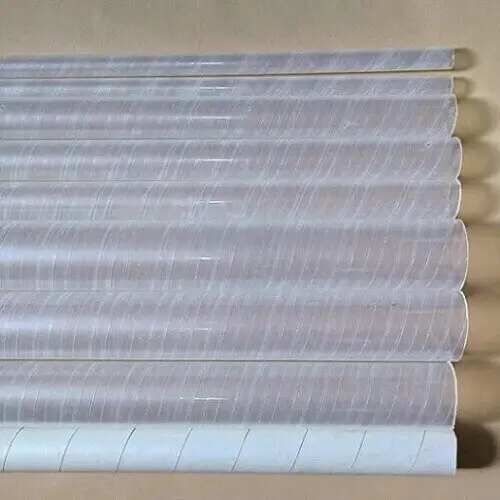
Tell us the flange size, the pressure class, the gasket type (Type E full-face or Type F ring gasket), the material (neoprene faced phenolic or plain faced phenolic), the quantity, and whether the gasket is for a standalone isolation joint or for a complete isolation kit with sleeves and washers. If you are not sure which grade is correct for your service temperature, send us the flange drawing and the process conditions and we will match the correct gasket.
Address
No 432 Zhenhai Middle Road, Luotuo Street, Zhenhai District, Ningbo City, Zhejiang China
Tel