Flange Isolating Gasket for High Pressure — Stainless Steel Core, Spring-Energized Teflon Seal
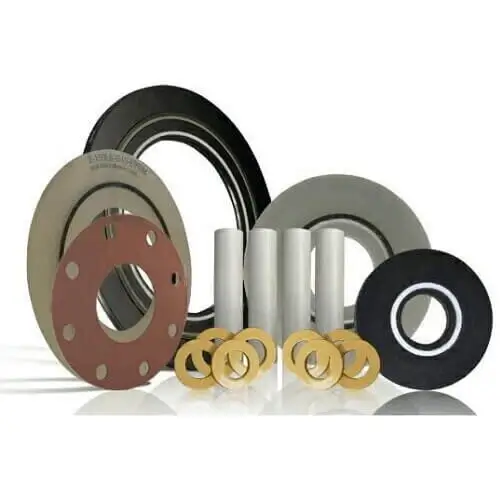
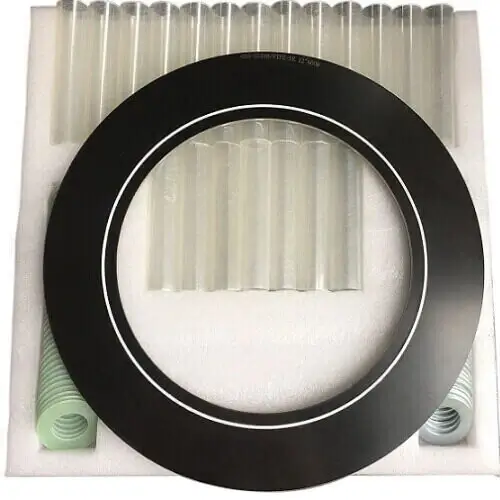
KXT-150 Flange Isolating Gasket utilizes a stainless steel core bonded with high strength insulating laminate G10 or G11, which not only maintains the high strength of stainless steel but also reaches excellent insulation. It consists of a spring-energized Teflon seal which provides high confidence sealing and eliminates costly leaks.
The seal groove is cut into the stainless steel core, which avoids leakage through the interval of two materials. The KXT-150 is designed to seal and insulate for very critical services, on raised face flanges, full face flanges, and ring joint flanges, at all pressures up to ANSI 2500# and API 15,000 PSI.
A KXT-150 flange isolating gasket is a high-pressure isolation gasket built for very critical service. Unlike a standard flat isolation gasket where the retainer is a phenolic plate, the KXT-150 retainer is a stainless steel core bonded with a high-strength insulating laminate (G10 or G11). This construction maintains the high mechanical strength of stainless steel while achieving excellent electrical insulation across the full joint.
Sealing is provided by a spring-energized Teflon seal seated in the retainer. The spring energizer increases the resilience of the Teflon and keeps radial load on the seal through pressure cycling, so the KXT-150 provides high confidence sealing and eliminates costly leaks in the most demanding services. Because the seal is pressure activated, the seal actually becomes tighter as the internal pressure increases.
The seal groove is cut into the stainless steel core, not into the laminate. On a conventional bonded laminate gasket, a fluid leak path can exist through the interval between the two materials. Machining the groove into the metal core eliminates this potential leak path because the seal is seated against a continuous stainless steel surface.
The KXT-150 is built from three functional layers. Each layer has a specific role in carrying the bolt load, breaking the electrical circuit and sealing the joint.
Stainless Steel Core
The central core is a stainless steel plate — SS 316 or SS 316L as standard — that carries the bolt load and provides the mechanical strength of the gasket. The seal groove is machined directly into the stainless steel core, which avoids leakage through the interval between the two materials. More exotic materials such as Super Duplex, Hastelloy and Inconel are available.
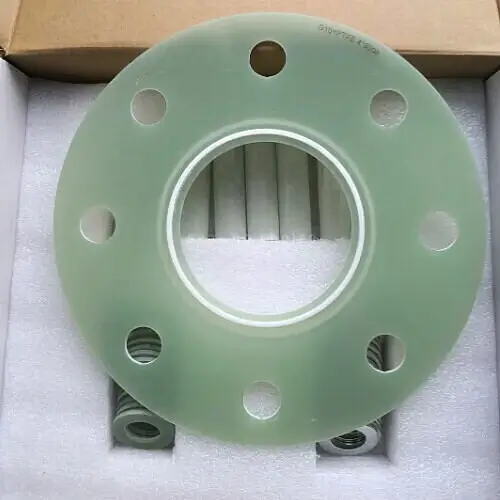
G10 / G11 Insulating Laminate
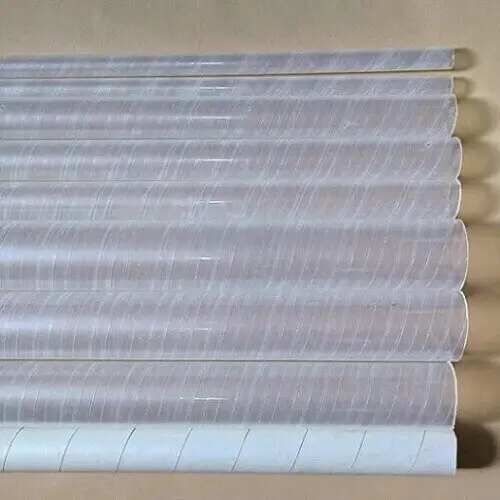
High-strength insulating laminate G10 or G11 is bonded to the stainless steel core. G10 provides high dielectric strength (550 V/mil), high compressive strength (65,000 psi) and low water absorption (0.1%). G11 extends the continuous operating temperature from 150 °C to 202 °C. The laminate provides the electrical insulation that breaks the circuit between the two flanges.
Spring-Energized Teflon Seal
A spring-energized Teflon (PTFE) seal is seated in the seal groove. The spring energizer increases the resilience of Teflon and improves the whole gasket's sealing performance. Teflon has excellent corrosion resistance and temperature resistance, which makes spring-energized Teflon the most reliable sealing element for very critical service. The pressure-activated seal becomes tighter as the internal pressure increases.
The KXT-150 is designed to seal and insulate at all pressures up to ANSI 2500# and API 15,000 PSI. Unlike a Type E or Type F isolation gasket that fits only one flange geometry, the KXT-150 can be supplied for all three standard flange geometries — raised face, full face and ring joint — and can also match a mismatched RTJ to a raised face flange.
ANSI 2500# and API 15,000 PSI
The KXT-150 is designed to seal and insulate at all pressures up to ANSI 2500# and API 15,000 PSI. The pressure-activated seal design ensures reliable sealing under pressure cycling, vibration and large bending moments. The seal becomes tighter as the internal pressure increases, so the gasket does not lose performance even when the joint is subjected to severe cyclic loading.
Raised Face, Full Face and RTJ
The KXT-150 can seal and insulate raised face flanges, full face flanges and ring joint (RTJ) flanges. Because the same construction can be sized to fit all three geometries, it can also seal mismatched RTJ flanges with raised face flanges — a useful feature when the joint has to be built from two different flange types. The gasket is available to match any flange specification including ANSI, API, BS, DIN and AS.
The KXT-150 delivers a combination of high mechanical strength, reliable sealing and electrical insulation that flat isolation gaskets cannot match in very critical service.
The table below defines the fit, function and limits of the KXT-150 flange isolating gasket. Confirm the exact flange size, pressure class, bore, core material and seal on the enquiry.
ANSI 2500# · API 15,000 PSI
The KXT-150 is used in very critical service — wellheads, Christmas trees, compressors, valve assemblies, pump connections and high-pressure RTJ joints — where the cost of gasket failure cannot be accepted. Typical applications include:
What is a KXT-150 flange isolating gasket for high pressure?
A KXT-150 flange isolating gasket is a high-pressure flange isolation gasket that utilizes a stainless steel core bonded with high-strength insulating laminate G10 or G11. This maintains the high mechanical strength of stainless steel while achieving excellent electrical insulation. A spring-energized Teflon seal provides high-confidence sealing and eliminates costly leaks. The seal groove is cut into the stainless steel core, which avoids leakage through the interval between the two materials.
What pressure rating does the KXT-150 support?
The KXT-150 flange isolating gasket is designed to seal and insulate raised face flanges, full face flanges and ring joint flanges at all pressures up to ANSI 2500# and API 15,000 PSI. The pressure-activated seal design ensures reliable sealing under pressure cycling, vibration and large bending moments.
Why is the seal groove cut into the stainless steel core instead of the laminate?
The seal groove of the KXT-150 is cut into the stainless steel core, not into the insulating laminate. This avoids the potential leak path that would exist through the interval between the two materials if the groove were cut into the laminate. Because the groove is machined into the metal core, the seal is seated against a continuous stainless steel surface, which gives higher confidence sealing and eliminates costly leaks.
What core materials are available for the KXT-150?
While SS 316 grade of stainless steel is the most commonly required core material, Kaxite can also offer SS 316L, Super Duplex S31803, Hastelloy and Inconel cores. The correct core material depends on the process fluid, the operating temperature and the required corrosion resistance. Special core materials are available on request.
What flange types does the KXT-150 fit?
The KXT-150 can seal and insulate raised face flanges, full face flanges and ring joint (RTJ) flanges. Because the same construction can be sized to fit all three geometries, it can also seal mismatched RTJ flanges with raised face flanges — a useful feature when the joint has to be built from two different flange types. The gasket is available to match any flange specification including ANSI, API, BS, DIN and AS.
Where is the KXT-150 flange isolating gasket used?
The KXT-150 is used in very critical service — wellheads, Christmas trees, compressors, valve assemblies, pump connections and high-pressure RTJ joints — where the cost of gasket failure cannot be accepted. It is designed to withstand severe service conditions including large bending moments, vibration, temperature and pressure cycling, and corrosive environments including high concentrations of CO2, H2S and produced water. It is also used for cathodic protection, galvanic corrosion protection and electrical isolation between dissimilar metal flanges.
Send us your specification — we reply within 24 hours
Tell us the flange size, the pressure class (ANSI 2500# or API 15,000 PSI), the flange type (raised face, full face or RTJ), the core material (SS 316, SS 316L, Super Duplex, Hastelloy or Inconel), the laminate (G10 or G11), the flange standard and the quantity. If you are not sure whether the KXT-150 or a standard flat isolation gasket is the correct choice for your joint, send us the flange drawing and the process conditions and we will match the correct gasket.
Address
No 432 Zhenhai Middle Road, Luotuo Street, Zhenhai District, Ningbo City, Zhejiang China
Tel