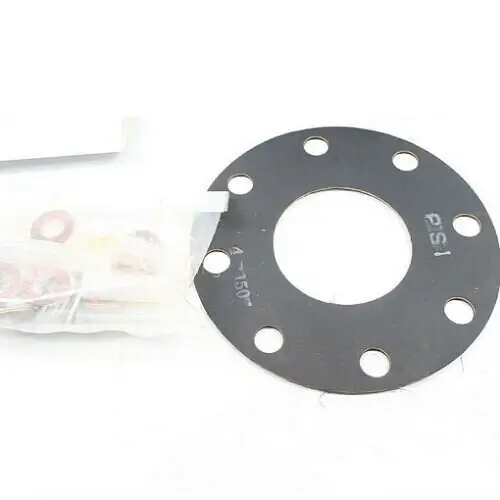
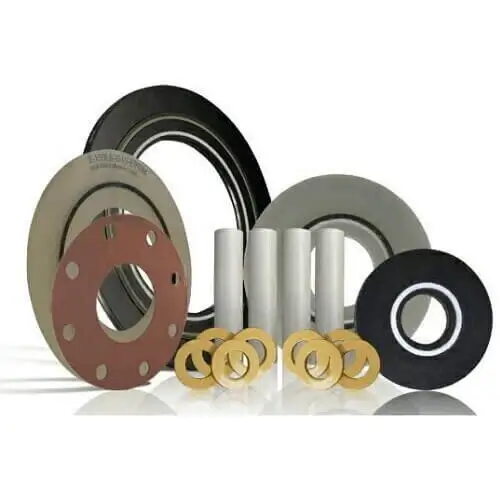
What Are Flange Insulating Gasket Sets and What Are They Used For? At a Monday procurement review, an EPC buyer spreads a failed flange photo across the table: a carbon steel pipeline flange, a stainless steel valve flange, a damp offshore site, and a repair bill that no one budgeted for. The maintenance team found crevice corrosion, a crushed gasket, and a bolt sleeve that had been cut too short. The question is not simply price per kit. It is whether the flange joint can keep two dissimilar metals electrically separated, seal the process fluid, and survive installation, pressure cycling, and cathodic protection. For procurement teams, the phrase covers a complete dielectric joint: an insulating gasket, bolt sleeves, insulating washers, steel washers, and often a coated or plated bolt set. Used correctly, these components stop galvanic current, protect pipeline coatings, reduce stray-current damage, and keep flanged joints serviceable. They appear on oil and gas pipelines, water systems, chemical plants, LNG facilities, and any isolated flange where cathodic protection must not leak across the joint. Buying the lowest-cost kit without checking material, dimensions, pressure class, and installation tolerances often creates a bigger cost after startup. A precise specification and a supplier who understands flange isolation are the practical safeguards.

What the Set Includes and How It Breaks the Electrical Path
A common site scene is a maintenance crew installing a new gasket while reusing old washers and a shortened bolt sleeve. The flange seals at first, but an electrical continuity test shows a direct path through the bolts. Weeks later, cathodic protection current is running through the joint, the coating near the flange begins to disbond, and the buyer faces a second shutdown. The problem is rarely one component alone; it is an incomplete kit.
A proper flange insulating gasket set works as a system. The insulating gasket separates the two flange faces. Bolt sleeves isolate the bolt shanks from the flange bolt holes. Insulating washers separate the nuts and bolt heads from the flange metal. Steel washers spread the bolt load and protect the insulating washers from damage. When every part is specified for the same pressure class, bolt size, and service condition, the joint can seal process fluid while maintaining electrical isolation.
| Component | Function | Typical Material | Buyer Check |
|---|---|---|---|
| Insulating gasket | Primary dielectric seal between flange faces | G10/FR4, phenolic, neoprene, EPDM, PTFE | Thickness, inner and outer diameter, pressure class, fluid compatibility |
| Bolt sleeves | Isolate bolt shank from flange bolt holes | G10/FR4, phenolic, nylon, PTFE | Bolt diameter, sleeve length, wall thickness, chamfer |
| Insulating washers | Isolate nut and bolt head from flange metal | G10/FR4, phenolic | Hardness, outside diameter, thickness, load rating |
| Steel washers | Distribute clamping load and protect insulation | Zinc-plated carbon steel, stainless steel | Flatness, coating, hardness, matching bolt size |
| Bolts and nuts | Provide controlled clamping force | Coated carbon steel, stainless steel, specialty alloys | Grade, coating, length, thread engagement, torque plan |
The Corrosion Pain Point: Why a Flange Joint Needs Electrical Isolation
For a pipeline engineer, the warning sign may be a cathodic protection reading that will not hold, a coating survey that shows unexpected current demand, or a flange that corrodes faster than the rest of the line. A buried carbon steel pipe connected to a stainless steel valve creates a galvanic couple. If the flange joint is electrically continuous, current can leave the protected structure, accelerate corrosion on the less noble metal, and waste cathodic protection output.
The solution is not simply a rubber sheet cut to shape. A complete dielectric flange kit blocks the electrical path at the gasket, sleeves, and washers while maintaining a reliable seal. It also protects the joint from water ingress, thermal movement, and bolt relaxation. For procurement, this means checking the full isolation assembly, not just the gasket price.
| Pain Scenario | Field Symptom | Practical Solution | Parameter to Confirm |
|---|---|---|---|
| Dissimilar metal flanges | Galvanic corrosion near the joint | Full insulating gasket set with sleeves and washers | Gasket material, bolt sleeve fit, washer hardness |
| Cathodic protection current loss | Low pipe-to-soil reading or high current demand | Electrically isolated flange assembly | Continuity test, sleeve length, gasket dielectric strength |
| Thermal cycling | Gasket creep, bolt load loss, seepage | Material and thickness selected for temperature and load | Temperature range, gasket compression, bolt torque |
| Water or chemical ingress | Swelling, cracking, or seal damage | Fluid-compatible gasket and washer material | Chemical resistance, water absorption, aging data |
| Over-torque during assembly | Cracked washers or crushed sleeves | Correct washer type and controlled tightening | Washer compressive strength, installation procedure |
Material Selection: Matching the Gasket, Sleeve, and Washer to the Service
A chemical plant buyer may receive a low-cost kit that seals water beautifully but swells in a solvent line. An offshore project may find that a nylon sleeve performs well in a dry flange but absorbs moisture in a humid environment. The purchasing lesson is simple: material selection must follow the line condition, not the catalogue page.
G10/FR4 and phenolic laminates are common for high-strength electrical isolation. Neoprene and EPDM offer flexible sealing in water and utility services. PTFE is useful for chemical resistance but needs careful compression control. Nylon can work in some general-service sleeves but may not suit every temperature or moisture condition. The right answer depends on pressure, temperature, fluid, bolt load, and the required electrical resistance.
| Material | Temperature Tendency | Chemical Resistance | Best Fit | Procurement Caution |
|---|---|---|---|---|
| G10/FR4 | Good for many industrial ranges | Good general resistance | Gaskets, sleeves, washers in isolation kits | Confirm grade, thickness, and dielectric requirements |
| Phenolic | Moderate to high | Depends on resin and fluid | High-load insulating washers and gaskets | Check brittleness and torque limits |
| Neoprene | Moderate | Good for water and many utilities | Flexible sealing gaskets | Verify oil and solvent compatibility |
| EPDM | Moderate | Good for water, steam, and weather | Water and utility flange sealing | Not ideal for many hydrocarbon services |
| PTFE | Broad range | Excellent for many chemicals | Chemical and high-purity services | Control compression and creep |
| Nylon | Moderate | Limited by moisture and chemicals | Some general-service bolt sleeves | Confirm water absorption and temperature |
Specifications Buyers Should Confirm Before Ordering
The most expensive flange kit is the one that arrives with the wrong bolt circle, a sleeve that is 3 mm too long, or a gasket outside diameter that cannot sit inside the raised face. Expedited freight and a second shutdown quickly erase any unit-price saving. A procurement team should treat the flange data sheet as the starting point, not an afterthought.
Before release, confirm the flange standard, pressure class, face type, bolt count, bolt diameter, bolt circle, gasket inner and outer dimensions, sleeve length, washer outside diameter, and coating. If the line has cathodic protection, specify the electrical isolation requirement. If the service is hot or cyclic, ask for compression and creep data. If documentation is required, request material certificates and dimensional inspection records with the quotation.
| Parameter | Why It Matters | Typical Buyer Input |
|---|---|---|
| Flange standard | Controls dimensions and bolt pattern | ASME, EN, DIN, or project drawing |
| Pressure class | Sets thickness and mechanical demand | Class 150, 300, 600, 900, or project rating |
| Face type | Affects gasket seating and seal | Raised face, flat face, ring joint, or special |
| Bolt size and count | Determines sleeve and washer fit | M16, M20, 1/2 in, 3/4 in, and total bolts |
| Gasket dimensions | Prevents leakage and wrong seating | ID, OD, thickness, bore, and bolt hole spacing |
| Sleeve length | Must isolate the full bolt hole without crushing | Flange thickness plus gasket and washer stack |
| Washer OD and hardness | Prevents cracking and electrical bypass | Bolt size, load, torque, and material grade |
| Temperature and fluid | Drives material compatibility | Design temperature, medium, concentration, and cycling |
| Documentation | Supports QA and project handover | Material certificate, dimensional report, test record |
Installation and Inspection: Avoiding the Hidden Cost of a Wrong Bolt Sleeve
On site, a fitter may force a sleeve into a bolt hole, trim it with a knife, or omit an insulating washer because the bolt is tight. Each shortcut can create a direct electrical path or a weak seal. The buyer may never see this during delivery, but the cost appears at commissioning when the continuity test fails or the joint leaks after the first thermal cycle.
The solution is a simple installation plan. Keep the flange faces clean and aligned. Insert the gasket without damage. Fit the correct sleeve length so it covers the bolt hole and washer stack. Use insulating washers on both sides where specified. Tighten in a controlled crossing pattern to the approved torque. After assembly, perform a visual check and an electrical continuity test where required. For critical lines, record bolt torque, gasket batch, and inspection results.
| Installation Check | What to Inspect | Risk If Missed |
|---|---|---|
| Flange face condition | Clean, dry, free of burrs and old gasket | Leak path or gasket damage |
| Sleeve fit | Correct length, no cutting, no forcing | Electrical bypass or crushed sleeve |
| Washer placement | Insulating and steel washers in correct order | Continuity through nut or bolt head |
| Bolt lubrication | Approved lubricant compatible with insulation | Incorrect torque and material attack |
| Tightening pattern | Crossing sequence and staged torque | Uneven gasket compression and leakage |
| Continuity test | No electrical path across the isolated joint | CP current loss and corrosion risk |
Procurement Checklist for Flange Insulating Gasket Sets
A purchasing officer often receives three quotations with similar photos and very different prices. The lowest quote may exclude steel washers, use a thinner gasket, or omit material certificates. The highest quote may include unnecessary features. The practical approach is to compare the full kit against the line requirement and the total cost of installation, inspection, and downtime.
Ask each supplier to confirm the complete bill of materials, material grades, dimensions, pressure class, temperature range, fluid compatibility, and documentation. Request a dimensional drawing for approval. For repeat projects, keep a flange data sheet and a verified kit specification on file so the next order does not restart from zero. A supplier that can solve these details before shipment is more valuable than a catalogue with a low headline price.
| Procurement Item | Why It Matters | Evidence to Request |
|---|---|---|
| Complete kit scope | Avoids missing sleeves or washers | Itemized bill of materials |
| Dimensional approval | Prevents site fit-up problems | Drawing with ID, OD, thickness, and lengths |
| Material grade | Controls seal and dielectric performance | Material certificate and data sheet |
| Pressure and temperature | Matches service conditions | Rating statement and application review |
| Electrical isolation | Supports cathodic protection | Continuity test method and dielectric data |
| Packaging and labeling | Protects parts and simplifies site issue | Kit label, size marking, and packing list |
| Delivery plan | Keeps shutdown and turnaround dates | Production schedule and shipment confirmation |
Two Buyer Questions About What Are Flange Insulating Gasket Sets and What Are They Used For?
Question 1: What Are Flange Insulating Gasket Sets and What Are They Used For in a Cathodic Protection System?
They are complete dielectric flange assemblies used to stop electrical current from passing through a bolted joint. In a cathodic protection system, the insulating gasket, bolt sleeves, and insulating washers keep the protected pipe electrically separate from a valve, meter, or another pipeline section. This separation helps the cathodic protection current stay on the intended structure instead of leaking across the flange. For procurement, confirm the required isolation resistance, flange standard, bolt dimensions, and whether the kit needs coated bolts, steel washers, and test certificates.
Question 2: What Are Flange Insulating Gasket Sets and What Are They Used For When the Line Has High Temperature or Thermal Cycling?
They are used to maintain both a seal and electrical isolation when temperature changes can cause gasket creep, bolt relaxation, or material aging. In hot or cyclic service, the gasket and insulating washers must be selected for the design temperature and compressive load, while the bolt sleeves must keep the correct length after tightening. A buyer should provide the design temperature, cycle frequency, fluid, pressure class, and bolt torque plan. A high-temperature kit is not simply a thicker gasket; it is a matched set of materials and dimensions that works together.
How Ningbo Kaxite Sealing Materials Co., Ltd. Solves Procurement Problems
For procurement teams that need a reliable dielectric joint, Ningbo Kaxite Sealing Materials Co., Ltd. supplies flange insulating gasket sets, gasket kits, bolt sleeves, and insulating washers for pipeline, petrochemical, water, and industrial flange applications. The company helps buyers solve common order risks by confirming pressure class, flange standard, gasket material, bolt dimensions, sleeve length, washer hardness, and documentation before production. Project teams can review product options at https://www.flange-insulation-gasket-kits.com or send drawings and service conditions to [email protected] for a practical quotation and material recommendation. If your current flange joint shows electrical continuity, gasket creep, or repeated isolation failures, share the line conditions and let Ningbo Kaxite Sealing Materials Co., Ltd. help you specify a kit that fits the flange, the fluid, and the installation team.
References
Zhang, Y., Li, H., & Wang, J. (2021). Galvanic corrosion behavior of dissimilar metal flange joints in marine environments. Corrosion Science, 178, 109064.
Olesen, J., & Nielsen, L. P. (2019). Performance of electrically insulating flange gaskets under cyclic thermal loading. Journal of Pressure Vessel Technology, 141(5), 051203.
Zhu, X., & Chen, D. (2020). Cathodic protection interference and electrical isolation in buried pipelines. Engineering Failure Analysis, 115, 104678.
Kumar, S., & Rao, P. V. (2018). Sealing behavior of PTFE and composite gaskets in bolted flange joints. International Journal of Pressure Vessels and Piping, 165, 24-33.
Ahmed, M., & Rahman, S. (2022). Dielectric properties of G10/FR4 laminates for industrial flange insulation. Journal of Materials Engineering and Performance, 31(7), 5589-5600.
Li, Q., Zhao, R., & Sun, Y. (2017). Finite element analysis of insulated flange joints under combined pressure and temperature. Applied Thermal Engineering, 126, 442-451.
Brown, R. T., & Wilson, K. J. (2016). Creep relaxation of non-asbestos gasket materials in bolted joints. Journal of Tribology, 138(3), 031301.
Patel, N., & Desai, A. (2020). Electrochemical isolation for pipeline flanges: design and field experience. Materials Performance, 59(9), 34-40.
Garcia, M., & Lopez, F. (2023). Life prediction of insulating gasket kits in oil and gas service. Journal of Offshore Mechanics and Arctic Engineering, 145(2), 021702.
Singh, R., & Mehta, K. (2021). Bolt load control and electrical continuity checks for isolated flange assemblies. Journal of Engineering Design, 32(4), 215-231.