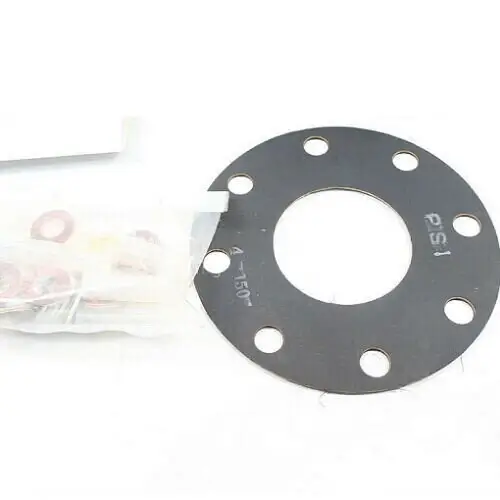
NFIK 603
Neoprene-Faced · PhenolicNeoprene-Faced Phenolic Flange Insulation Gasket Kit — Style NFIK 603 — has long been a standard insulation gasket in the water, gas and oil industries, because the soft neoprene rubber gives excellent sealing efficiency. For this type of flange insulation gasket kit, soft neoprene rubber sheet is bonded to either side of a laminated phenolic gasket retainer to deliver effective sealing performance and high electrical resistance. The working temperature limit of the Neoprene-Faced Phenolic Flange Insulation Gasket Kit is up to +79 °C.
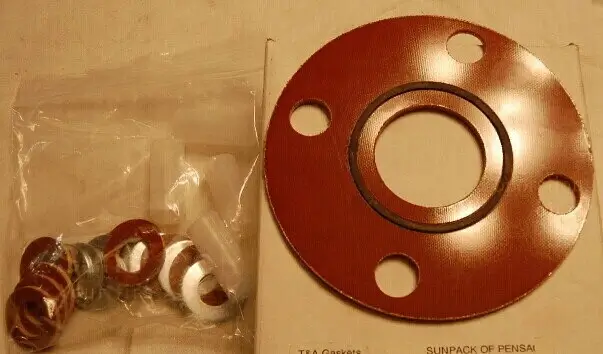
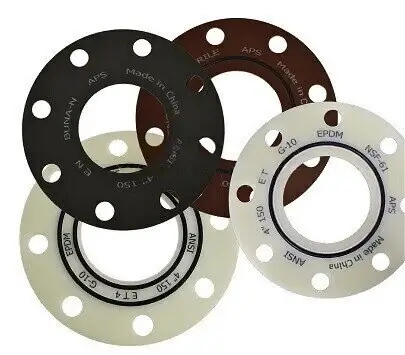
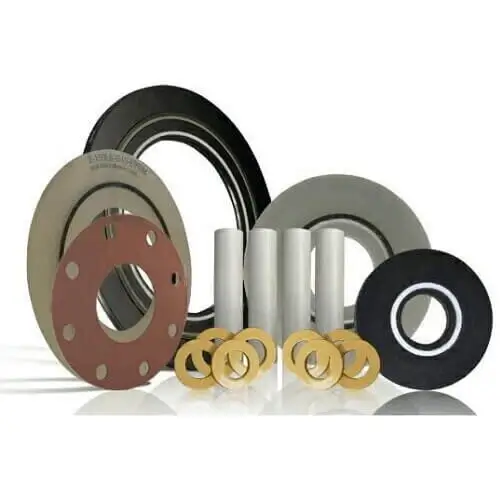
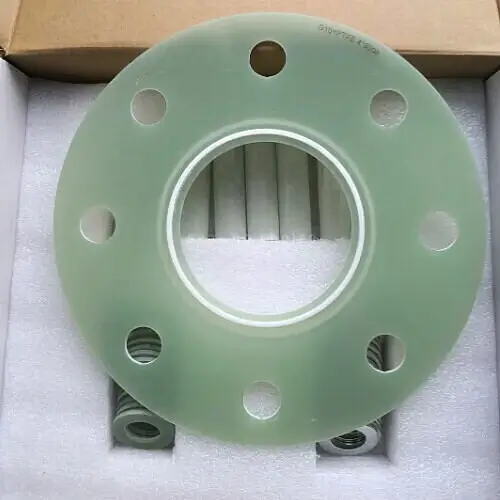
A Neoprene-Faced Phenolic Flange Insulation Gasket Kit is a three-layer flange gasket used to seal a bolted pipe joint and electrically isolate the two flanges from each other at the same time. The core is a laminated reinforced phenolic sheet — a rigid dielectric material that carries the bolt load and blocks the flow of electrical current. Bonded to each face of the phenolic core is a layer of soft neoprene (polychloroprene) rubber. The two neoprene facings are the sealing element: they conform to the flange surface under bolt load and close the joint at moderate torque.
The kit is called Neoprene-Faced Phenolic — Style NFIK 603 — because the retainer is a fabric-reinforced phenolic plate and both faces are laminated with neoprene sheet. Because the neoprene rubber is soft, it gives excellent sealing efficiency on raised-face flanges, which is why the NFIK 603 has long been a standard insulation gasket in the water, gas and oil industries.
The purpose of the Neoprene-Faced Phenolic Flange Insulation Gasket Kit is to break the electrical circuit between two adjacent flanges. When a carbon steel flange is bolted to a stainless steel, brass or cast iron flange and an electrolyte is present, a galvanic current can flow between the two metals and corrode the more active one. The insulation gasket breaks that circuit. The same kit is also used to isolate a cathodic protection system on buried or submerged pipelines so the protection current is not short-circuited across the flange.
The parameters below define the fit and function of the NFIK 603 kit. Confirm the exact flange size, pressure class and standard on the enquiry.
+79 °C (neoprene limit)
The table below lists the mechanical and electrical properties of the phenolic core used in the NFIK 603, NFIK 604, NFIK 605 and NFIK 606 kits. These values are typical for the reinforced phenolic grade and are used for design verification and incoming inspection.
The NFIK 603 is part of a wider phenolic flange insulation gasket family. All four kits share the same reinforced phenolic core construction; the difference is in the facing material and the sealing element. Send us the flange type and the process conditions and we will match the correct kit.
Neoprene-Faced Phenolic Insulation Gasket
Soft neoprene rubber facing on both sides of a phenolic retainer. Excellent sealing efficiency on raised-face flanges. Standard insulation gasket in water, gas and oil service. Bonded for high electrical resistance.
Max +79 °CPlain Phenolic Insulation Gasket
The gasket retainer is made of reinforced plain phenolic without neoprene or nitrile facing. Available as a Type E or Type F gasket only, or as one part of a standard kit with phenolic and steel washers with Mylar® sleeves. Higher temperature limit than the faced variants.
Max +105 °CNitrile-Faced Phenolic Insulation Gasket
High-strength reinforced plain phenolic core with two nitrile (NBR) layers bonded on both sides. Suitable for hot and cold water, steam, oils, fuels, gases and a wide range of general chemicals. Available as gasket only or as a complete kit.
Max +79 °CPhenolic Insulation Gasket with Sealing Element
High-performance phenolic insulation gasket with a Nitrile or Viton sealing element for superior sealing effect. Easy to install and tolerant of misaligned or mismatched flanges. Works from ANSI Class 150 through Class 600 pressure ratings.
ANSI Class 150 – 600All NFIK phenolic insulation gaskets are produced in three standard flange-facing geometries. The geometry is set by the flange type, not by the material — so the same Neoprene-Faced phenolic construction can be supplied as Type D, Type E or Type F depending on your flange.
The NFIK 603 is specified wherever a raised-face flange joint must be sealed and electrically isolated at the same time — most commonly to stop galvanic corrosion between dissimilar metals, to protect a flange face from corrosion attack, or to isolate a cathodic protection system.
Water Pipelines
Large-diameter water and wastewater transmission mains where the flange joint must be isolated to protect the pipeline coating.
Gas Transmission
Gas transmission and distribution lines where insulation joints are required at regular intervals for corrosion control.
Oil & Fuel Service
Oil, fuel and hydrocarbon pipelines where the joint must be sealed and electrically isolated at the same time.
Cathodic Protection
Buried or submerged pipelines where the cathodic protection system must be isolated from the next pipeline section.
Dissimilar Metal Joints
Where a carbon steel flange is bolted to a stainless steel, brass or cast iron flange — the insulation gasket breaks the galvanic circuit.
Refineries
Process piping, heat exchanger nozzles and vessel connections where dissimilar metals meet at a raised-face flange joint.
Pump & Valve Stations
Pump discharge, valve and meter connections where electrical insulation must be maintained.
Tank Farm & Terminal
Tank inlet and outlet flanges, loading and unloading lines — insulation of the tank from the process piping.
QWhat is a Neoprene-Faced Phenolic Flange Insulation Gasket Kit?
A Neoprene-Faced Phenolic Flange Insulation Gasket Kit — Style NFIK 603 — is a three-layer flange gasket: a laminated reinforced phenolic core with a soft neoprene (polychloroprene) rubber facing bonded to both sides. It is designed to seal a bolted pipe joint and electrically isolate the two flanges from each other at the same time, preventing galvanic corrosion and protecting the cathodic protection system.
QWhat is the maximum working temperature of the NFIK 603 kit?
The working temperature limit of the Neoprene-Faced Phenolic Flange Insulation Gasket Kit is up to +79 °C. The limit is set by the neoprene facing, not by the phenolic core. If your service runs hotter than +79 °C, choose the plain phenolic NFIK 604 kit (up to +105 °C) or the sealing-element NFIK 606 kit, or use the VCS kit with SS 316 core for higher temperatures.
QWhat is included in the standard NFIK 603 flange insulation gasket kit?
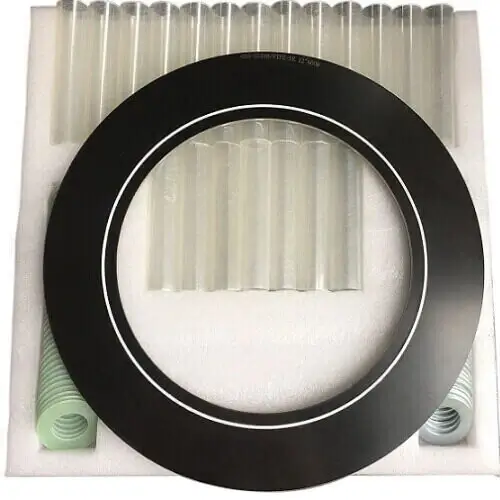
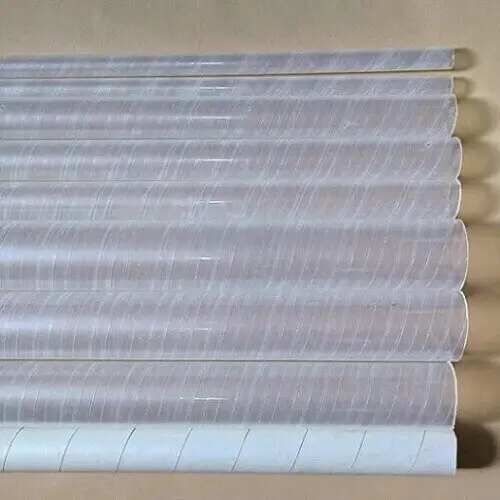
The standard kit includes one Neoprene-Faced phenolic insulation gasket, Mylar® insulation sleeves for each bolt, and ZPS (zinc-plated steel) backing washers. Together these components break every electrical path through the flange joint — across the flange faces, through the bolt holes and around the bolts.
QWhat are the differences between the NFIK 603, NFIK 604, NFIK 605 and NFIK 606 kits?
All four share the same reinforced phenolic core. The NFIK 603 uses soft neoprene facings for excellent sealing efficiency in water, gas and oil service up to +79 °C. The NFIK 604 uses a plain phenolic retainer with no facing, for higher-temperature dry service up to +105 °C. The NFIK 605 uses nitrile (NBR) facings for oil, fuel, steam and general chemical service up to +79 °C. The NFIK 606 adds a Nitrile or Viton sealing element for ANSI Class 150 to 600 flanges and misaligned joints.
QWhat standards does the Neoprene-Faced phenolic insulation gasket meet?
The gasket is manufactured to ANSI B16.5, AWWA C207, ASME B16.47 and API 6A. Custom gaskets to customer drawing are also accepted. The standard kit contents — gasket, Mylar® sleeves and ZPS (zinc-plated steel) washers — are supplied together as a matched set.
QWhat is the difference between Type D, Type E and Type F phenolic insulation gaskets?
Type D is designed for RTJ ring groove flanges and has a gasket retainer made of fabric-reinforced plain phenolic in oval or octagonal shape. Type E is a full-face gasket with the same outside diameter as the flange and precision-cut bolt holes, keeping the gasket aligned during installation. Type F is for raised-face flanges only — the gasket has no bolt holes and a slightly smaller OD than the bolt circle, so the gasket is centered between the bolts. The same Neoprene-Faced phenolic material can be supplied as any of the three types, with Type D normally supplied in plain phenolic.
Send us your specification — we reply within 24 hours
Tell us the flange size, the pressure class, the flange type (Type D RTJ, Type E full-face or Type F raised-face), the standard (ANSI B16.5, AWWA C207, ASME B16.47 or API 6A), the quantity, and the required kit scope (gasket only, or the complete kit with Mylar® sleeves and ZPS (zinc-plated steel) washers). If you are not sure whether you need the NFIK 603, NFIK 604, NFIK 605 or NFIK 606 kit, send us the flange drawing and the process conditions and we will match the correct kit.
Address
No 432 Zhenhai Middle Road, Luotuo Street, Zhenhai District, Ningbo City, Zhejiang China
Tel