When a maintenance team plans a cathodic protection isolation joint, the gasket often looks like a low-cost item—until a leak, a failed coating, or a continuity reading turns a weekend shutdown into a week of rework. Procurement teams searching for How do you select the right flange insulating gasket for cathodic protection? are really solving a system problem: dielectric strength, chemical compatibility, compression set, bolt-hole alignment, torque retention, and documentation must all match the pipeline, flange standard, and CP design. A gasket that is too soft may creep under torque; one that is too hard may fail to seal; the wrong material may swell in hydrocarbons or hydrolyze in wet service. Ningbo Kaxite Sealing Materials Co., Ltd. supports buyers with application review, material selection, dimensional checks, and batch traceability so the isolation kit performs as a complete dielectric system—not just a cut part. The practical path is to define the electrical barrier, confirm media and temperature, verify flange dimensions, set installation torque, and inspect the joint after assembly. This guide turns those steps into a buyer-friendly checklist, with parameter tables and field-focused Q&A for faster, safer sourcing.

Field pain scenario: A buyer receives three quotes for a flange insulating gasket set, and all three look similar on paper. Weeks later, the joint is assembled, but a continuity check shows metal-to-metal contact through a washer, or the gasket creeps under bolt load and the leak test fails. The hidden cost is not the gasket price; it is the shutdown extension, re-torque labor, and re-inspection documentation.
Practical solution: Define the isolation duty before comparing suppliers. Confirm the CP system voltage, the pipeline operating media, the design temperature range, the flange standard, the bolt size and grade, and the required test method. For procurement, the right gasket is the one that matches the whole assembly: gasket, sleeve, washer, coating, and torque plan. Ningbo Kaxite Sealing Materials Co., Ltd. helps buyers turn a vague RFQ into a measurable specification so the quoted kit can be checked against real service conditions.
| Parameter | Buyer Question | Procurement Check |
|---|---|---|
| CP design voltage | What isolation voltage must the joint withstand? | Dielectric test value above system requirement |
| Service media | Hydrocarbon, brine, wet sour gas, or water? | Material compatibility statement |
| Temperature range | Minimum and maximum operating temperature? | Continuous rating with safety margin |
| Flange standard | ASME B16.5, EN 1092, or project drawing? | Dimensional drawing approval |
| Bolt torque | What assembly torque will be used? | Compression and creep data |
| Traceability | Can batch records be supplied? | Material certificate and batch ID |
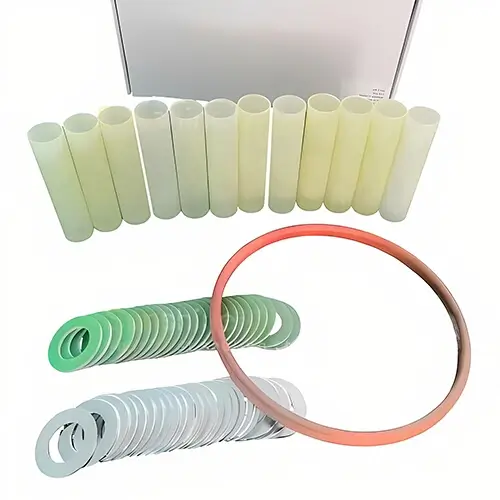
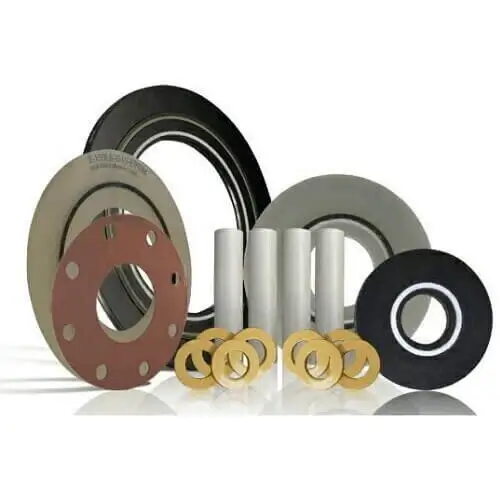
For CP isolation, “similar dimensions” is not enough. The gasket must work with the sleeve length, washer thickness, bolt coating, and flange face condition. A small mismatch can create a path for water ingress or electrical continuity. Buyers who compare total kit performance, not just gasket thickness, avoid most field surprises.
Field pain scenario: A terminal receives a low-cost elastomer gasket for a hydrocarbon line. It seals perfectly at startup, but after several thermal cycles it swells, softens, and loses bolt load. In another case, a hard composite gasket is used on a fragile lined flange, and the coating is damaged during make-up. Both failures begin with a material choice made from a price table instead of a service review.
Practical solution: Select the gasket material and the insulating sleeve as a pair. G10/FR4 is common for high-strength electrical isolation, while neoprene, EPDM, nitrile, and PTFE are chosen for different chemical and temperature duties. The bolt sleeve must also resist the environment and fit the bolt hole without cracking. Ningbo Kaxite Sealing Materials Co., Ltd. reviews media, temperature, torque, and flange face condition to recommend a balanced kit rather than a single component.
| Material Type | Typical Strength | Watch-Out | Best Fit |
|---|---|---|---|
| G10/FR4 composite | High dielectric and compressive strength | Brittle if over-torqued or poorly supported | High-isolation pipeline joints |
| Neoprene | Good weather and oil resistance | Limited high-temperature service | General water and utility flanges |
| EPDM | Excellent water and steam resistance | Poor hydrocarbon resistance | Water, steam, and outdoor lines |
| Nitrile (NBR) | Good oil and fuel resistance | Limited ozone and weather aging | Oil and hydrocarbon service |
| PTFE | Broad chemical resistance | Creep under high load if not designed | Chemical and aggressive media |
The correct answer is rarely “the hardest gasket” or “the cheapest rubber.” It is the material combination that keeps dielectric resistance while maintaining sealability under the actual bolt load. For CP isolation, a small change in gasket hardness can shift the compression set and torque retention enough to affect the entire joint.
Field pain scenario: A flange insulating gasket passes a bench dielectric test, so the buyer assumes it is ready. After installation, the joint sees thermal cycling and bolt relaxation. The gasket compresses unevenly, the seal face loses contact pressure, and the isolation reading becomes unstable. The problem is not one weak property; it is the interaction between electrical resistance, compression, and creep.
Practical solution: Ask for data that reflects the assembled condition. Dielectric strength alone does not guarantee a sealed joint, and compression data alone does not prove electrical isolation. Review dielectric strength, compressive modulus, compression set, creep resistance, water absorption, and torque retention as a performance set. Ningbo Kaxite Sealing Materials Co., Ltd. supports buyers by matching these parameters to flange size, bolt load, and CP design so the selected gasket behaves predictably in service.
| Property | Why It Matters | Procurement Specification |
|---|---|---|
| Dielectric strength | Blocks CP current across the joint | Test voltage above design requirement |
| Compression set | Maintains seal after thermal cycles | Low set at specified temperature |
| Creep resistance | Prevents bolt-load loss | Data at assembly torque |
| Water absorption | Protects electrical resistance in wet service | Low absorption for buried or wet lines |
| Torque retention | Keeps the joint tight over time | Verified with washers and sleeves |
For procurement, the key is to request test conditions, not just headline values. A dielectric number without thickness, temperature, and moisture condition is difficult to compare. A compression value without torque and gasket size is equally weak. Use like-for-like data so the quote can be judged fairly.
Field pain scenario: The gasket arrives with the right outside diameter, but the bolt holes are slightly off, or the insulating sleeves are too short. During make-up, the sleeve does not cover the full bolt length, and the washer cracks under load. The buyer then faces a choice: force the assembly, mix parts from another supplier, or delay the shutdown.
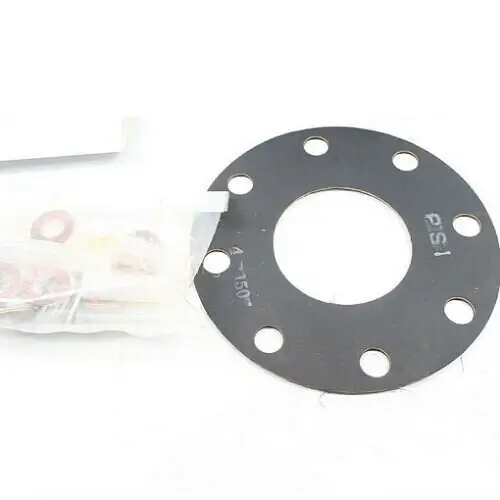
Practical solution: Approve the kit as an assembly. Check gasket inside diameter, outside diameter, bolt circle, hole diameter, thickness, sleeve length, sleeve diameter, washer thickness, and chamfer details against the flange drawing. The gasket must center correctly and the sleeve must isolate the full bolt shank without interfering with thread engagement. Ningbo Kaxite Sealing Materials Co., Ltd. reviews flange drawings and kit dimensions before production so buyers receive a coordinated set, not loose parts that need field modification.
| Kit Component | Dimension Check | Field Risk If Wrong |
|---|---|---|
| Gasket | ID, OD, bolt circle, thickness | Poor sealing or off-center bolt holes |
| Insulating sleeve | Length, OD, ID, flange face coverage | Electrical contact through bolt |
| Insulating washer | Thickness, hardness, hole fit | Cracking or load concentration |
| Steel washer | Flatness, coating, chamfer | Coating damage and corrosion path |
| Coating | Holiday-free, full coverage | Localized corrosion and CP shielding issues |
A complete kit check also protects schedule. When dimensions are confirmed early, the buyer avoids urgent machining, mixed batches, and unplanned re-testing. For shutdown work, that schedule control is as valuable as the gasket itself.
Field pain scenario: The crew uses the same torque as a standard steel-to-steel flange. The composite gasket cracks at the bolt hole, or the insulating washer deforms. In another case, bolts are tightened in a random pattern, causing uneven compression and a leak path on one side of the flange.
Practical solution: Use a torque plan written for the isolation kit. Clean and inspect flange faces, align the gasket and sleeves, lubricate bolt threads as approved, and tighten in a star or cross pattern in stages. Verify final torque and re-check after thermal stabilization when the procedure allows. Ningbo Kaxite Sealing Materials Co., Ltd. can supply installation guidance matched to the selected materials and kit design so the crew does not rely on guesswork.
| Installation Step | Control Point | Inspection Note |
|---|---|---|
| Surface preparation | Clean, dry, free of burrs and old gasket | No coating damage on sealing face |
| Kit alignment | Sleeves centered, washers seated flat | No pinch or offset |
| Torque sequence | Cross pattern, staged increments | Record final torque values |
| Re-torque | After temperature stabilization if specified | Check for relaxation and leaks |
| Electrical test | Continuity and isolation check | Document readings before commissioning |
Torque is not a “set and forget” value. It is a process control. When the gasket, sleeve, washer, and coating are treated as one system, the crew can protect both the seal and the dielectric barrier.
Field pain scenario: The joint is mechanically complete, but no one records the isolation resistance or continuity check. Months later, a CP survey shows unexpected current flow, and the team cannot tell whether the gasket failed, a washer was omitted, or a coating was damaged during installation.
Practical solution: Test and document the joint after assembly. Record visual inspection, kit batch IDs, torque values, continuity readings, and isolation resistance. Keep material certificates and dimensional reports with the project file. Ningbo Kaxite Sealing Materials Co., Ltd. supports traceability with batch identification and documentation so procurement and maintenance teams can close the loop from purchase order to field verification.
| Inspection Item | Method | Acceptance Record |
|---|---|---|
| Visual kit check | Confirm sleeves, washers, gasket, coating | Photo and checklist |
| Continuity | Check no metal-to-metal bridge | Pass/fail reading |
| Isolation resistance | Use approved meter and test voltage | Value above project limit |
| Torque log | Record final bolt torque | Signed installation sheet |
| Traceability | Link batch ID to material certificate | Project dossier |
Documentation may feel like paperwork until a CP issue appears. Then it becomes the fastest way to find the cause and protect the next shutdown from repeating the same problem.
Scenario: A buyer needs an isolation kit for a wet sour gas line, and the supplier offers a standard neoprene gasket because it is in stock. Solution: Start with media compatibility and temperature, then confirm dielectric strength and compression behavior. Request material data for the gasket, sleeve, and washer, and verify that the kit is suitable for the flange face and bolt load. For sour and wet service, the buyer should not accept a generic “oil-resistant” statement. Ningbo Kaxite Sealing Materials Co., Ltd. reviews the service conditions and helps select a kit that balances chemical resistance, sealing, and electrical isolation.
Scenario: A procurement officer has a short shutdown window and needs a complete kit delivered quickly. Solution: Send the flange drawing, bolt size, media, temperature, torque, and required test documentation in the first inquiry. Ask the supplier to confirm kit dimensions and batch traceability before production. Speed should not remove the dimensional and material checks. Ningbo Kaxite Sealing Materials Co., Ltd. works from clear application data so buyers can shorten approval time without accepting a kit that may need field modification.
Field pain scenario: A buyer places an order for gaskets, sleeves, and washers from three different sources. The parts arrive on time, but they do not fit together. The gasket thickness does not match the sleeve length, and the washer outside diameter interferes with the flange radius. The shutdown crew spends hours sorting and modifying parts.
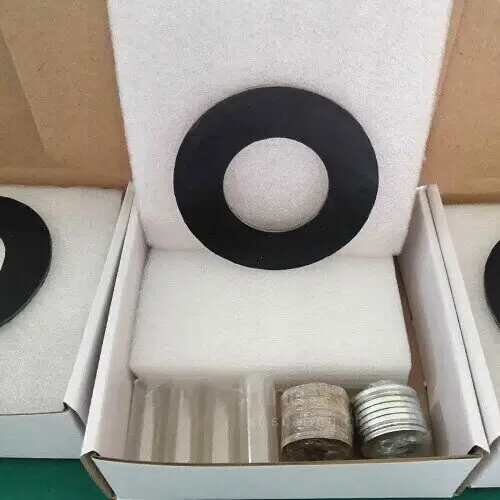
Practical solution: Buy the isolation kit from a supplier who controls dimensions, materials, and documentation as one package. Ask for drawings, material certificates, batch traceability, packaging protection, and installation guidance. A supplier who understands cathodic protection will ask about media, torque, and test requirements before quoting. Ningbo Kaxite Sealing Materials Co., Ltd. focuses on flange insulation gasket kits for CP isolation and supports buyers with practical specification review, kit matching, and export documentation.
| Supplier Check | Why It Matters | What to Request |
|---|---|---|
| Application review | Avoids a generic kit for a specific line | Media, temperature, torque, flange data |
| Dimensional control | Prevents field modification | Approved drawing and inspection report |
| Material traceability | Supports audits and failure review | Batch ID and material certificate |
| Kit completeness | Reduces mixed-part risk | Packing list by flange size |
| Technical support | Improves installation confidence | Torque and handling guidance |
When a supplier can answer detailed questions about dielectric performance, compression, media compatibility, and kit dimensions, the buyer gains more than a price. The project gains a lower risk of rework and a cleaner path through inspection and commissioning.
For buyers who need a reliable CP isolation solution, Ningbo Kaxite Sealing Materials Co., Ltd. supplies flange insulating gasket kits with a focus on material selection, dimensional fit, and practical field support. Learn more at https://www.flange-insulation-gasket-kits.com and send your flange drawing, service media, temperature, torque, and required documentation to [email protected] for a focused review. Share the line conditions early, and the team can help you compare materials, confirm kit fit, and move from inquiry to a traceable isolation solution with fewer field surprises.
Stern, M., & Geary, A. L. (1957). Electrochemical polarization: I. A theoretical analysis of the shape of polarization curves. Journal of the Electrochemical Society, 104(1), 56–63.
Pourbaix, M. (1974). Applications of electrochemistry in corrosion science and in practice. Corrosion Science, 14(1), 25–82.
Gummow, R. A. (1991). Cathodic protection of reinforced concrete: A review. Corrosion, 47(10), 764–771.
Payer, J. H., & von Baeckmann, W. (1997). Pipeline corrosion and cathodic protection. Materials Performance, 36(9), 24–31.
Roberge, P. R. (2000). Cathodic protection: A practical guide. Corrosion Reviews, 18(2–3), 153–176.
Zhang, X., & Cheng, Y. F. (2009). Electrochemical corrosion of pipeline steel under cathodic protection. Corrosion Science, 51(5), 1064–1072.
Liu, Y., & Wang, Z. (2013). Compression stress relaxation and sealing performance of fiber-reinforced epoxy gaskets. Journal of Materials Engineering and Performance, 22(8), 2314–2322.
Kumar, A., & Singh, R. (2016). Dielectric and mechanical properties of G10/FR4 composites for electrical isolation. Polymer Composites, 37(6), 1741–1749.
Chen, H., & Li, J. (2018). Chemical compatibility of elastomeric gasket materials in hydrocarbon service. Sealing Technology, 2018(7), 7–12.
Ahmad, S., & Ali, M. (2020). Inspection and testing of flange isolation kits for cathodic protection systems. Materials Performance, 59(4), 38–45.
-