When a procurement engineer opens a Monday-morning RFQ for electrical insulation components, the first practical question is often, “How Are Mylar Insulating Sleeves Installed?” The answer matters because a sleeve that looks simple on a drawing can delay a production line, fail a dielectric test, or create rework if the cut length, inner diameter, or edge quality is wrong. Buyers at OEMs and Tier 1 suppliers are not only comparing price per piece; they are comparing installation risk, repeatable fit, and documentation. A loose sleeve may slide out of position during harness assembly, while an oversized sleeve may add bulk and reduce clearance inside a compact motor, transformer, or battery pack. A sharp cut edge can initiate a split during routing, and inconsistent wall thickness can change creepage and clearance calculations. This is where Ningbo Kaxite Sealing Materials Co., Ltd. becomes useful: the company supplies Mylar insulating sleeves with controlled dimensions, clean cut edges, and production-friendly formats so procurement teams can answer the installation question with confidence. Instead of treating the sleeve as a commodity, Kaxite helps buyers match film thickness, sleeve ID/OD, cut length, and tolerances to the actual assembly method. The result is a part that slides into place, stays where the design intends, and supports electrical and thermal protection without last-minute changes. For purchasing teams, that means fewer sample loops, clearer inspection criteria, and a supplier who can discuss how the sleeve will be installed before the PO is issued.
Why Procurement Teams Ask How Are Mylar Insulating Sleeves Installed?
The pain point appears when a buyer receives a drawing with a thin polymer sleeve and no clear installation note. The line team needs a part that slides over a conductor, busbar, or harness bundle without wrinkling; the quality team needs a dielectric barrier that stays in position; and the purchasing team needs a repeatable part number that will not trigger a change request after the first sample. When the installation method is unclear, quotes are hard to compare because one supplier may quote a loose cut length while another quotes a pre-formed sleeve with a controlled ID. Ningbo Kaxite Sealing Materials Co., Ltd. solves this by treating the RFQ as an installation discussion, not just a dimension sheet. Kaxite reviews the mating part, insertion direction, wire bundle diameter, and expected bend radius, then recommends a Mylar Insulating Sleeve format that supports the assembly sequence.
| Procurement concern | Installation impact | Kaxite control |
|---|---|---|
| Sleeve ID too tight | Film stretches, wrinkles, or splits during insertion | ID/OD tolerance review against mating part |
| Cut edge quality | Sharp edges initiate cracks and reduce dielectric margin | Clean cutting and visual acceptance criteria |
| Length variation | Sleeve exposes terminals or interferes with routing | Cut-to-length production with documented tolerance |
For purchasing staff, the practical answer to “How Are Mylar Insulating Sleeves Installed?” starts with fit. A sleeve that is easy to install is usually a sleeve that was specified around the assembly method, not chosen only by film thickness.
Installation Anatomy: From Cut-to-Length to Final Inspection
A common scene on the assembly floor is a technician holding a curled Mylar sleeve, trying to feed it over a stiff wire bundle while a second operator holds the harness. If the sleeve is too long, it bunches at the bend; if it is too short, it leaves a gap near the terminal. The solution is a simple installation sequence that is agreed before mass production. Kaxite supports this by supplying Mylar insulating sleeves in formats that reduce handling, such as straight cut lengths, slit rolls, and pre-sized sleeves for repetitive harness builds.
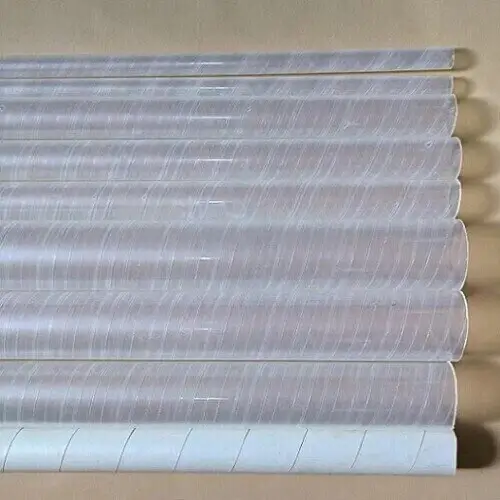
| Installation step | Action | Acceptance check |
|---|---|---|
| 1. Verify sleeve | Confirm ID, length, thickness, and material before routing | Part number matches drawing and sample |
| 2. Deburr mating part | Remove sharp edges from conductor, busbar, or fixture | No burrs that can snag the film |
| 3. Slide into position | Insert from the open end without twisting or stretching | Sleeve covers the specified zone |
| 4. Secure if required | Use tape, tie, or retention feature only as drawing allows | No movement under normal handling |
| 5. Final inspection | Check wrinkle, split, gap, and clearance | No visible damage; creepage path maintained |
This is the practical answer to “How Are Mylar Insulating Sleeves Installed?” in high-mix production: define the insertion direction, protect the film from sharp edges, and inspect the finished position rather than only the incoming sleeve.
Material and Dimension Parameters That Drive Reliable Performance
A buyer may approve a low-cost sleeve sample, then discover that the production lot feels different: the film is stiffer, the cut end is rougher, or the ID is tight on the same mandrel. The pain point is specification drift. The solution is to convert installation needs into measurable parameters. Ningbo Kaxite Sealing Materials Co., Ltd. helps procurement teams define those parameters so the Mylar insulating sleeve behaves the same way on the first assembly and the thousandth assembly.
| Parameter | Typical range to validate | Procurement check |
|---|---|---|
| Film thickness | 0.025–0.350 mm, depending on dielectric and space needs | Confirm thickness tolerance and test method |
| Dielectric strength | Supplier datasheet value by thickness and condition | Request voltage test report if critical |
| Continuous service temperature | Common PET film range around -70°C to 150°C | Match to motor, transformer, or battery pack |
| ID/OD | Per mating part and insertion clearance | Check against mandrel or sample harness |
| Cut length | Drawing-specific, with agreed tolerance | Review first-article inspection |
When these values are written into the purchase specification, the installation question becomes easier to answer because the sleeve is no longer a vague “thin film tube.” It is a controlled component with a defined fit and function.
Common Installation Pain Points and Kaxite's Practical Solutions
The most expensive sleeve is the one that stops the line. A purchasing team may face a urgent request after an operator reports that the sleeve will not slide over a bent busbar, or that the cut end has opened during packing. These are not only quality complaints; they are installation signals. Kaxite addresses them by reviewing the failure mode, not just replacing the part. If the issue is insertion friction, the company can discuss ID, film stiffness, and edge condition. If the issue is movement after installation, the conversation moves to length, retention, and routing.
| Pain point scene | Risk | Kaxite solution |
|---|---|---|
| Sleeve splits during insertion | Dielectric path compromised | Review ID, edge quality, and insertion method |
| Sleeve slides out of position | Exposed conductor and rework | Adjust length and suggest retention options |
| Cut edges look inconsistent | Inspection rejection and scrap | Define cut method and visual acceptance sample |
| Material feels different lot to lot | Assembly feel changes | Lock material grade and thickness tolerance |
For buyers, this is the commercial value of working with Ningbo Kaxite Sealing Materials Co., Ltd.: the supplier can connect a line-side installation issue to a drawing parameter and a production control, which shortens the corrective action loop.
FAQ: How Are Mylar Insulating Sleeves Installed in Different Assemblies?
Q1: How Are Mylar Insulating Sleeves Installed on a high-vibration wire harness without damaging the film?
A1: Start with a clean cut length and a deburred routing path. Slide the Mylar insulating sleeve over the bundle from the open end, avoid twisting the film, and position it so the specified coverage zone is fully protected. If the drawing allows, add a retention tie or tape away from the cut edge. For high-vibration applications, Kaxite can review the sleeve ID, wall thickness, and cut length against the harness sample so the sleeve fits without stretching. The purchasing team should request a first-article sample and confirm that the installed sleeve does not wrinkle at bends or gap near terminals.
Q2: How Are Mylar Insulating Sleeves Installed when the assembly needs both thermal and dielectric protection?
A2: The installation sequence should protect the film first and then confirm clearance. Verify the service temperature, dielectric requirement, and available space before selecting thickness. During assembly, keep sharp metal edges away from the sleeve, slide it into the thermal zone without folding, and inspect for splits or thinning after insertion. Kaxite supports this by matching film thickness, sleeve dimensions, and cut length to the application, and by providing documentation for procurement review. The buyer should confirm that the installation method, material grade, and inspection criteria are aligned before releasing the PO.
| FAQ focus | Parameter to confirm | Why it matters |
|---|---|---|
| High-vibration harness | ID, length, retention method | Prevents movement and edge damage |
| Thermal plus dielectric | Thickness, temperature rating, clearance | Maintains protection without overbulk |
Procurement Checklist and Supplier Evaluation
A purchasing manager may receive three quotes that look identical on price but differ in installation support. The pain point is hidden risk: one supplier may not control cut length, another may not provide edge inspection criteria, and a third may change film grade without notice. The solution is a short procurement checklist that ties the Mylar insulating sleeve to the assembly line. Ningbo Kaxite Sealing Materials Co., Ltd. can support this checklist with samples, dimension reports, and production controls so the buyer can compare suppliers on total installation risk rather than unit price alone.
| Checklist item | Why it matters | Evidence to request |
|---|---|---|
| Drawing review | Confirms installation direction and coverage | Marked-up drawing or sample photo |
| Tolerance agreement | Prevents tight fit or loose fit | First-article inspection report |
| Material grade | Maintains dielectric and thermal performance | Material datasheet and compliance statement |
| Edge quality standard | Reduces splits and inspection disputes | Visual acceptance sample |
| Packaging and lead time | Protects sleeves from deformation in transit | Packaging specification and schedule |
Company Introduction and Contact
If your team is comparing suppliers and needs a practical answer to “How Are Mylar Insulating Sleeves Installed?”, share your drawing, sample, or installation photo with Ningbo Kaxite Sealing Materials Co., Ltd. The company focuses on sealing and insulation components, including Mylar insulating sleeves, and supports procurement teams with dimension review, sample validation, cut-to-length supply, and production-ready inspection criteria. Rather than offering a generic catalog part, Kaxite helps buyers match the sleeve to the assembly method, clearance, and documentation requirements so the part works on the line and in the quality file. You can review product and company information at https://www.flange-insulation-gasket-kits.com or email [email protected] to discuss your Mylar insulating sleeve project, request a sample, or confirm installation parameters before your next purchase order.
Research References
Smith, J. A., & Lee, H. (2018). Dielectric breakdown behavior of thin PET films under repetitive voltage pulses. IEEE Transactions on Dielectrics and Electrical Insulation, 25(3).
Zhang, Y., Liu, Q., & Wang, F. (2020). Thermal aging effects on mechanical and electrical properties of biaxially oriented PET films. Polymer Degradation and Stability, 178.
Kumar, R., & Patel, M. (2019). Surface roughness and partial discharge inception in flexible polymer insulation. Journal of Electrical Engineering & Technology, 14(2).
Wang, L., Chen, Q., & Zhao, S. (2021). Cut-edge quality and dielectric reliability of thin polymer sleeves in automotive harnesses. IEEE Access, 9.
Brown, T., & Garcia, P. (2017). Abrasion resistance of polyester film insulation in vibration environments. Journal of Materials Engineering and Performance, 26(8).
Müller, K., & Fischer, D. (2022). Chemical compatibility of PET insulation with automotive fluids. Polymer Testing, 105.
Tanaka, H., & Sato, K. (2016). Creepage and clearance design for thin-film insulation in compact power modules. IEEE Transactions on Power Electronics, 31(12).
Oliveira, M., & Santos, R. (2023). Quality control of cut-to-length polymer sleeves using optical inspection. Journal of Manufacturing Systems, 68.
Chen, X., Liu, Y., & Wu, J. (2020). High-temperature dielectric performance of PET composite films for motor windings. Journal of Applied Polymer Science, 137(18).
Ivanov, D., & Petrov, A. (2018). Failure analysis of insulating sleeves in transformer manufacturing. Engineering Failure Analysis, 92.