Mylar Insulating Sleeve for Flange Bolt Isolation and Galvanic Corrosion Control
Mylar insulating sleeve is used to insulate or isolate bolts from dissimilar metal flanges to avoid galvanic corrosion. Mylar has excellent dielectric strength and low water absorption. Mylar sleeves are designed to fit easily over the flange bolts and may be used with standard-size bolts and bolt holes even with some misalignment. Insulating sleeves have a standard wall thickness and are generally used with separate insulating washers such as G10/G11 glass epoxy or phenolic.
A Mylar sleeve is the most recognised and industry-approved sleeve and bolt insulating material. We recommend a Mylar sleeve because it is stronger than phenolic and less prone to cracking when being torqued or becoming broken during the installation process.
A Mylar insulating sleeve is a PET (polyester) sleeve used to insulate or isolate bolts from dissimilar metal flanges to avoid galvanic corrosion. Mylar has excellent dielectric strength and low water absorption. The sleeve is designed to fit easily over flange bolts and may be used with standard-size bolts and bolt holes even with some misalignment.
In a flange insulation gasket kit, the Mylar insulating sleeve sits inside each bolt hole and prevents the bolt shank from contacting the flange. Together with the insulating washers and the central isolation gasket, the Mylar sleeve breaks every electrical path through the flange joint. This preserves the isolation of the joint and protects the cathodic protection system on a buried or submerged pipeline from being short-circuited across the flange.
Insulating sleeves have a standard wall thickness and are generally used with separate insulating washers such as G10/G11 glass epoxy or phenolic. A Mylar sleeve is the most recognised and industry-approved sleeve and bolt insulating material. Mylar is recommended because it is stronger than phenolic and less prone to cracking when being torqued or becoming broken during the installation process.
The table below defines the standard range of the Mylar insulating sleeve. Confirm the exact inside diameter, wall thickness, cut length and quantity on the enquiry — custom sizes to drawing are accepted.
0.66 mm to 70 mm
0.03 mm to 1 mm
2 m
The Mylar insulating sleeve has a dielectric strength that far exceeds other shrinkable materials. It is extremely tough and forms an excellent mechanical barrier. It can be used at both low and high temperatures. It is moisture and vapour resistant and is unaffected by oils, greases and volatile aromatics.
High Dielectric Strength
Mylar has a dielectric strength that far exceeds other shrinkable materials. The sleeve provides reliable electrical isolation between the bolt and the flange, even in wet or humid environments.
Tough Mechanical Barrier
Mylar is extremely tough and forms an excellent mechanical barrier. It is stronger than phenolic and less prone to cracking when being torqued or becoming broken during the installation process.
Low and High Temperature Use
The Mylar insulating sleeve can be used at both low and high temperatures, with a maximum operating temperature of 149 °C. This covers most water, gas, oil and petrochemical pipeline isolation joints.
Chemical and Moisture Resistance
Mylar is moisture and vapour resistant and is unaffected by oils, greases and volatile aromatics. This makes it suitable for pipeline isolation joints in wet, oily and chemically aggressive service.
The table below lists the physical properties of the Mylar insulating sleeve. These values are typical for the standard Mylar PET grade and are used for design verification and incoming inspection.
| Testing Item | Testing Method | Testing Unit | Testing Result |
|---|---|---|---|
| Density | ASTM D1505 | g/cm³ | 1.39 |
| Water Absorption, 24 hrs | ASTM D570 | % | 0.75 |
| Tensile Strength | ASTM D882 | psi | 28,000 |
| Max Operating Temperature | — | °C | 149 |
The Mylar insulating sleeve and the phenolic sleeve are both used to break the electrical path through the bolt hole of a flange insulation joint. The choice between them depends on the mechanical demands of the installation and the temperature and chemical service conditions.
Mylar Insulating Sleeve
Phenolic Sleeve
Installation Note
When the flange bolt is tightened, the Mylar sleeve must not be forced into the bolt hole. Do not use pressure that could damage the sleeve material. A damaged sleeve can short the isolation and defeat the cathodic protection on the pipeline. Replace any sleeve that shows cracking, splitting or permanent deformation after installation.
The Mylar insulating sleeve is used wherever a bolted flange joint must be electrically isolated from the bolt. It is supplied together with flange insulation gaskets, insulating washers and plated steel washers as part of a complete flange insulation gasket kit, or separately as a cut-to-length sleeve.
What is a Mylar insulating sleeve?
A Mylar insulating sleeve is a PET (polyester) sleeve used to insulate or isolate bolts from dissimilar metal flanges to avoid galvanic corrosion. Mylar has excellent dielectric strength and low water absorption. The sleeve is designed to fit easily over flange bolts and may be used with standard-size bolts and bolt holes even with some misalignment. It is generally used with separate insulating washers such as G10/G11 glass epoxy or phenolic.
Why choose a Mylar sleeve instead of a phenolic sleeve?
A Mylar sleeve is recommended because it is stronger than phenolic and less prone to cracking when being torqued or becoming broken during the installation process. Mylar has a dielectric strength that far exceeds other shrinkable materials, is extremely tough, forms an excellent mechanical barrier, and can be used at both low and high temperatures. Mylar is the most recognised and industry-approved sleeve and bolt insulating material.
What sizes are available for the Mylar insulating sleeve?
The Mylar insulating sleeve is available with an inside diameter from 0.66 mm to 70 mm, a wall thickness from 0.03 mm to 1 mm, and a standard length of 2 m per piece. Custom inside diameters, wall thicknesses and cut-to-length sleeves are available to customer drawing.
What is the maximum operating temperature of the Mylar insulating sleeve?
The maximum operating temperature of the Mylar insulating sleeve is 149 °C. Mylar is moisture and vapour resistant, and is unaffected by oils, greases and volatile aromatics, so the sleeve performs well in water, gas, oil and petrochemical pipeline isolation joints.
What are the physical properties of the Mylar insulating sleeve?
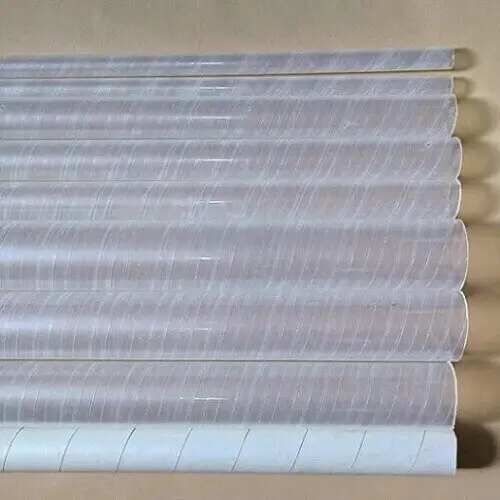
Density 1.39 g/cm³ (ASTM D1505). Water absorption 0.75 % over 24 hrs (ASTM D570). Tensile strength 28,000 psi (ASTM D882). Maximum operating temperature 149 °C. Mylar insulating sleeves are transparent or striped, and are supplied at 2 m per piece as standard.
What is the Mylar insulating sleeve used for?
The Mylar insulating sleeve is used as the bolt-hole insulating sleeve in flange insulation gasket kits, where it prevents the bolt shank from contacting the flange and breaks the electrical path through the bolt hole. This preserves the isolation of the flange joint and protects the cathodic protection system on a buried or submerged pipeline. Mylar sleeves are used in water, gas, oil, petrochemical and offshore pipeline isolation joints.
Send us your specification — we reply within 24 hours
Tell us the inside diameter, the wall thickness, the required length per piece, the quantity, and whether the sleeve is for a flange insulation gasket kit or for a standalone bolt isolation application. If you are not sure whether Mylar or phenolic is the correct sleeve material for your joint, send us the flange drawing and the process conditions and we will match the correct sleeve.
Address
No 432 Zhenhai Middle Road, Luotuo Street, Zhenhai District, Ningbo City, Zhejiang China
Tel