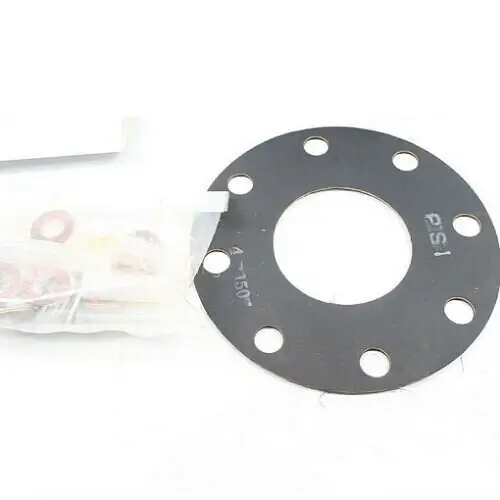
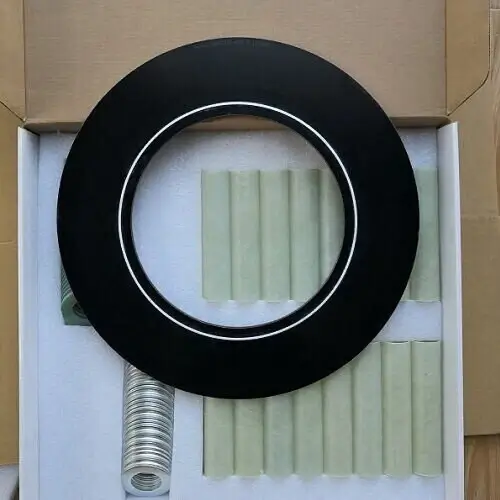
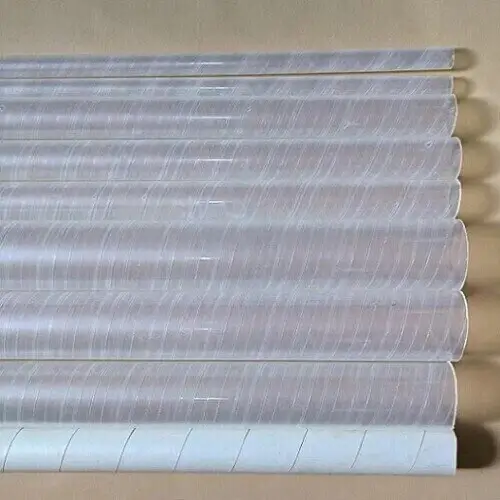
What Materials Are Used in Type D Flange Insulation Gaskets? If you are a procurement specialist reviewing a flange isolation kit specification late at night, the answer is not one polymer name. A Type D Flange Insulation Gasket usually combines a rigid insulating plate, elastomer sealing faces, insulating sleeves, and washers; the material choice decides whether the joint survives vibration, thermal cycling, seawater, hydrocarbons, or aggressive chemicals. In one offshore retrofit, a buyer saved a few dollars per kit by switching from glass-reinforced epoxy to a lower-grade laminate; six months later, cracked washers and creeping torque turned a routine maintenance task into a shutdown. The right material is the one that matches dielectric strength, compression, temperature, chemical exposure, and bolt load—not simply the cheapest data sheet. Ningbo Kaxite Sealing Materials Co., Ltd. builds Type D flange insulation gasket kits around that reality, helping buyers compare G10/G11 epoxy, phenolic, PTFE, Neoprene, EPDM, Viton, and Nitrile options before purchase. This guide explains the materials, parameters, sourcing checks, and documentation that keep isolation joints reliable. It also shows how to ask better questions about gasket grade, sleeve length, washer hardness, and certificate traceability so a low-cost purchase does not become a high-cost leak.
Pain point: A maintenance engineer finds white corrosion deposits around a flange, a torque wrench that no longer holds reading, and a low insulation resistance reading after only one year in service. The gasket sheet looked correct at purchase, but the sleeves were short, the washers were soft, and the laminate absorbed moisture. The joint failed as a system, not as a single part.
Solution: Treat the Type D flange insulation gasket as a matched kit: central insulating gasket, sealing faces, bolt sleeves, insulating washers, and steel washers must work together. Ningbo Kaxite Sealing Materials Co., Ltd. helps buyers define the service condition first, then match laminate grade, elastomer, sleeve length, washer hardness, and documentation to that condition. This prevents galvanic corrosion and cathodic protection current loss while keeping bolt preload stable.
Parameter table:
| Kit Component | Common Materials | Key Parameter | Failure Symptom | Sourcing Note |
|---|---|---|---|---|
| Central insulating gasket | G10/G11 glass-reinforced epoxy, phenolic laminate | Dielectric strength, compressive strength, water absorption | Cracks, delamination, creep | Confirm laminate grade and batch traceability |
| Sealing face | Neoprene, EPDM, Viton/FKM, Nitrile/NBR, PTFE | Compression set, temperature limit, media compatibility | Leakage, swelling, hardening | Match to media, not only to line size |
| Bolt sleeve | G10/G11 epoxy, phenolic, PTFE | Wall thickness, length, dielectric strength | Bolt contact, short circuit | Check sleeve length against flange thickness |
| Insulating washer | G10/G11, phenolic, high-strength insulating laminate | Compressive modulus, hardness, creep resistance | Washer crush, torque loss | Specify washer hardness and bolt load |
| Steel washer | Zinc-plated steel, stainless steel | Flatness, thickness, coating | Galling, corrosion, uneven load | Confirm coating compatibility with environment |

Pain point: Two data sheets can show similar dielectric strength, yet one gasket survives a chemical line while another creeps under bolt load. Buyers often compare only one number and miss compression set, moisture absorption, temperature cycling, and chemical attack. The result is a material that looks strong on paper but leaks in service.
Solution: Compare materials by function. G10/G11 epoxy and phenolic laminates provide rigid insulation and load-bearing strength. PTFE offers broad chemical resistance but needs careful design because of cold flow. Neoprene, EPDM, Viton, and Nitrile provide sealing elasticity, but each has clear limits. Ningbo Kaxite Sealing Materials Co., Ltd. reviews the full service envelope—media, temperature, pressure, bolt load, and outdoor exposure—before recommending a kit.
Parameter table:
| Material Family | Dielectric Behavior | Temperature Guide | Chemical Resistance | Typical Type D Use | Caution |
|---|---|---|---|---|---|
| G10/G11 glass-reinforced epoxy | High | Moderate to elevated | Good to oils, solvents, water | Central gasket, sleeves, washers | Check moisture absorption and UV exposure |
| Phenolic laminate | High | Moderate | Good in many industrial services | Central gasket, washers | Can be brittle under impact or over-torque |
| PTFE | Very high | Broad | Excellent across many chemicals | Sealing face, sleeve options | Cold flow and creep require design control |
| Neoprene | Moderate to high | Low to moderate | Good water and oil resistance | Elastomer sealing face | Check ozone and low-temperature limits |
| EPDM | High | Low to moderate | Good water, steam, and outdoor aging | Sealing face for water and utility lines | Poor resistance to many oils and fuels |
| Viton/FKM | High | Moderate to high | Good fuels, oils, and many chemicals | Sealing face for aggressive service | Higher cost; confirm specific media compatibility |
| Nitrile/NBR | Moderate to high | Low to moderate | Good oil and fuel resistance | Sealing face for oil-related service | Not suitable for ketones or strong acids |
Pain point: An offshore team plans a short maintenance window. The flange is exposed to salt spray, vibration, and thermal cycling. A standard kit arrives with sleeves that fit the flange thickness but not the insulated washer stack. Bolts are tightened, but the joint loses preload after startup. The team needs a matched kit and clear torque procedure, not another generic gasket sheet.
Solution: Specify the kit as an assembly. Confirm sleeve length against the full bolt stack, washer hardness against bolt load, and laminate grade against moisture and vibration. Ningbo Kaxite Sealing Materials Co., Ltd. supports offshore buyers with matched Type D flange insulation gasket kits, batch identification, and documentation that helps site teams verify parts before the shutdown window closes.
Parameter table:
| Parameter | What to Confirm | Why It Matters |
|---|---|---|
| Central gasket laminate | G10/G11 grade, thickness, water absorption | Maintains dielectric strength and compressive stability |
| Sleeve length | Flange thickness plus washer stack plus tolerance | Prevents bolt-to-flange contact and short circuits |
| Washer hardness | Compressive modulus and creep resistance | Protects preload during vibration and thermal cycling |
| Bolt coating | Zinc-plated or stainless steel, site exposure | Reduces corrosion and galling |
| Torque procedure | Lubrication, tightening sequence, final torque | Controls gasket compression and leak path |
| Electrical test | Insulation resistance after assembly | Verifies cathodic protection isolation |
Pain point: A chemical plant shuts down for a short maintenance window. The line carries a solvent that swells some elastomers, while the ambient humidity affects the laminate. The buyer has a pressure rating but no clear media compatibility matrix. A wrong sealing face can swell, soften, or leak soon after startup.
Solution: Start with the media, concentration, and temperature, then select the sealing face and insulating plate. PTFE can be suitable for broad chemical resistance, while Viton may fit certain fuels and oils. G10/G11 or phenolic laminate supports the insulating function. Ningbo Kaxite Sealing Materials Co., Ltd. helps buyers build a material matrix and verify sleeve and washer options before production.
Parameter table:
| Service Condition | Sealing Face Option | Insulating Plate Option | Sleeve/Washer Note | Buyer Check |
|---|---|---|---|---|
| Water and utility lines | EPDM | G10/G11 | Standard insulating washer stack | Confirm steam or chlorine exposure |
| Oils and fuels | Nitrile or Viton | G10/G11 or phenolic | Check washer hardness | Confirm aromatic content and temperature |
| Broad chemical resistance | PTFE | G10/G11 | Design for creep control | Confirm pressure and bolt load |
| Elevated temperature | Viton or PTFE | G10/G11 or high-grade phenolic | Verify sleeve material | Check continuous and peak temperature |
| Outdoor exposure | EPDM or Neoprene | G10/G11 with UV consideration | Coated steel washers | Confirm ozone and sunlight exposure |
Pain point: Procurement teams often receive conflicting answers from distributors: one says “phenolic,” another says “G10,” and a third recommends “PTFE everywhere.” The real answer depends on the service, bolt load, and documentation requirement.
Solution: Ask for a material breakdown by component and match it to the line condition. Ningbo Kaxite Sealing Materials Co., Ltd. provides component-level material recommendations so buyers can compare offers on the same basis.
Q1: What materials are used in Type D flange insulation gaskets for offshore oil and gas service?
A1: A common offshore kit uses a G10/G11 glass-reinforced epoxy central gasket, Neoprene, EPDM, or Viton sealing faces, G10/G11 or phenolic insulating sleeves, and insulated washers with zinc-plated or stainless steel backup washers. Confirm sleeve length, washer hardness, laminate moisture absorption, and batch traceability before purchase.
Q2: What materials are used in Type D flange insulation gaskets for high-temperature chemical lines?
A2: High-temperature chemical service may use PTFE or a high-temperature elastomer such as Viton for the sealing face, with G10/G11 or high-grade phenolic laminate for the insulating plate. PTFE offers broad chemical resistance but can creep, so bolt load and compression control must be reviewed. Always confirm concentration, continuous temperature, and peak temperature.
Parameter table:
| Buyer Question | Central Gasket | Sealing Face | Sleeve/Washer | Critical Check |
|---|---|---|---|---|
| Offshore oil and gas | G10/G11 epoxy | Neoprene, EPDM, or Viton | G10/G11 sleeve and washer | Salt spray, vibration, and torque retention |
| High-temperature chemical | G10/G11 or phenolic | PTFE or Viton | High-grade insulating laminate | Creep, media concentration, and peak temperature |
Pain point: A purchase order lists “Type D flange insulation gasket kit” but does not state laminate grade, sleeve length, washer hardness, or certificate requirements. The supplier ships a kit that meets the drawing but not the service. Receiving inspection finds the mismatch too late, and the shutdown schedule is at risk.
Solution: Use a component-level checklist in the inquiry. Ask for material data sheets, dimensional confirmation, batch identification, and test reports. Ningbo Kaxite Sealing Materials Co., Ltd. helps procurement teams close these gaps before the order is released, reducing rework and site delays.
Parameter table:
| Checklist Item | Why It Matters | Question to Ask |
|---|---|---|
| Laminate grade | Controls dielectric strength and creep | Is it G10, G11, or phenolic, and what is the batch? |
| Sealing face material | Controls media compatibility and compression set | Which elastomer or PTFE grade is used? |
| Sleeve dimensions | Prevents bolt contact and short circuits | What flange thickness and washer stack does it fit? |
| Washer hardness | Protects bolt preload | What compressive modulus and hardness are specified? |
| Documentation | Supports QA and audit traceability | Can you provide material certificates and dimensional reports? |
| Packaging and marking | Prevents site mix-ups | Are kits marked by line, size, and material code? |
Ningbo Kaxite Sealing Materials Co., Ltd. supports procurement teams, engineers, and maintenance planners who need reliable Type D flange insulation gasket kits for pipeline, offshore, chemical, and utility service. The company helps solve material mismatch problems by reviewing service media, temperature, bolt load, and installation details, then matching G10/G11 epoxy, phenolic, PTFE, Neoprene, EPDM, Viton, and Nitrile options to the application. Buyers can request dimensional confirmation, batch traceability, material documentation, and responsive quotation support through https://www.flange-insulation-gasket-kits.com or contact [email protected] for application-specific assistance.
Reference Studies
Abid, M., & Nash, D. H. (2016). A parametric study of metal-to-metal contact flanges with gaskets. International Journal of Pressure Vessels and Piping, 146.
Sawa, T., & Higuchi, K. (1983). A study on the sealing performance of bolted flange joints. Bulletin of JSME, 26(211).
Kondo, K., & Nishiguchi, N. (2004). Leakage characteristics of bolted flange joints with gaskets under elevated temperature. Journal of Pressure Vessel Technology, 126(4).
Murali, K. P., & Rao, B. N. (2015). Finite element analysis of bolted flange joint with gasket. International Journal of Mechanical Engineering and Technology, 6(3).
Patel, R., & Shah, D. (2019). Effect of gasket material on leakage in bolted flange joints. Materials Today: Proceedings, 18.
Zhang, Y., Li, Q., & Wang, H. (2020). Thermal-mechanical behavior of bolted flange joints with non-asbestos gaskets. Journal of Pressure Vessel Technology, 142(2).
Chen, J., & Li, H. (2018). Chemical resistance and sealing performance of PTFE gaskets in corrosive media. Polymer Testing, 67.
Rahman, M. A., & Ali, M. Y. (2017). Performance of elastomeric gaskets under compression and temperature cycling. Journal of Elastomers and Plastics, 49(5).
Ozturk, F., & Korkmaz, S. (2021). Dielectric and mechanical properties of G10 glass-reinforced epoxy laminates. Journal of Composite Materials, 55(12).
Kim, S., & Park, J. (2019). Insulating gasket materials for cathodic protection in pipeline flanges. Corrosion Engineering, Science and Technology, 54(6).