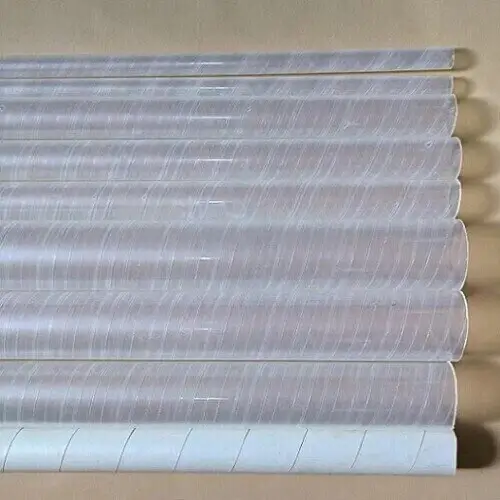
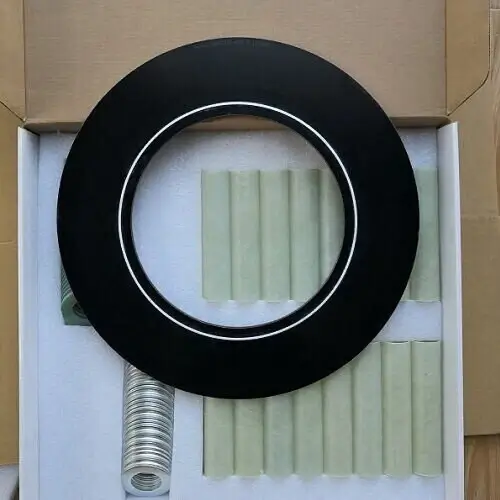
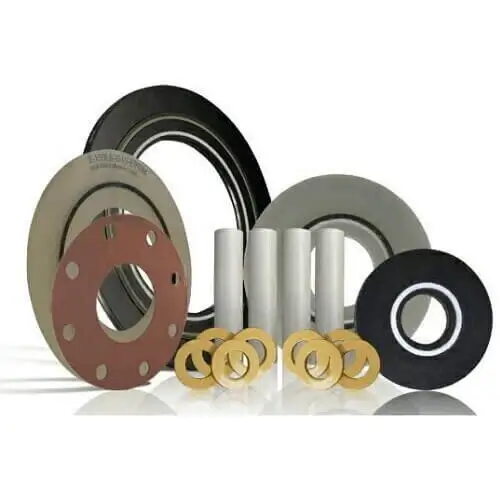
Is NEMA G10 Epoxy Fiberglass Tube water resistant? The practical answer for procurement teams is yes, within limits, and those limits decide whether the part succeeds in service. NEMA G10 is a thermoset laminate made from woven glass fabric and epoxy resin. It handles occasional splashes, humid plant air, cleaning washdown, and many electrical insulation duties far better than paper-based laminates, and it keeps dimensional stability when exposed to short-term moisture. It is not a universal “waterproof” material for continuous hot-water immersion, steam, strong solvents, or high-pressure cleaning without a confirmed test protocol. Water absorption is usually low but not zero; machined edges, surface finish, resin cure, wall thickness, and temperature all change the result. For a buyer, the wrong question is only “Is it water resistant?” The better question is: “What exposure, for how long, at what temperature, and with what electrical or mechanical acceptance limit?” At Ningbo Kaxite Sealing Materials Co., Ltd., we help teams answer that question before production by matching NEMA G10 epoxy fiberglass tube specifications to real washdown, humidity, insulation, and machining requirements, with batch traceability and practical documentation for supplier approval.
Pain point: A catalog line says “water resistant,” but the buyer has no idea whether that covers a humid cabinet, a daily washdown, or a part that sits in water. When a G10 tube swells, loses dielectric margin, or shows surface blushing, the purchasing team is left defending a material that looked correct on paper. Solution: convert the word “resistant” into exposure data and acceptance tests. Ask for water absorption, dimensional change, and electrical data after conditioning, not just dry-state values. Use the table below as a starting point for a specification review; final values must come from the supplier’s batch data and your application test.
| Property | Typical NEMA G10 reference | Procurement question |
|---|---|---|
| Water absorption, 24 h | About 0.05–0.30% depending on resin system, cure, and test | What is the maximum batch value, and is it tested per ASTM D570? |
| Dielectric strength, dry | Often quoted in a high kV/mm range; geometry matters | Do you have wet-conditioned or post-humidity dielectric data? |
| Dimensional change after moisture | Small but measurable; critical on thin walls and close fits | What tolerance shift should we expect after 48–168 h at 85% RH? |
| Continuous service temperature | Depends on resin and thermal class; verify with supplier | Will the part see hot water or steam cycling? |
| Machined edge condition | Cut glass fibers and micro-cracks can increase moisture uptake | Do you seal or finish machined edges for wet service? |
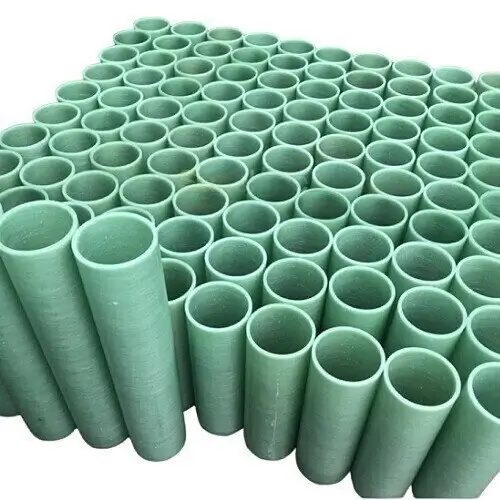
Pain point: Two projects both say “wet environment,” but one is a splash near a pump and the other is a tube submerged in a cooling bath. Buying the same NEMA G10 epoxy fiberglass tube for both can be a costly mistake. Solution: classify the exposure and then choose wall thickness, resin finish, machining, and inspection rules that match it. For washdown, focus on edge sealing and surface protection. For continuous immersion, request long-term immersion data and consider a different material or a protective liner. For humid electrical cabinets, prioritize post-humidity dielectric data and dimensional tolerance.
| Exposure scenario | Risk to G10 tube | Recommended procurement action |
|---|---|---|
| Occasional splash or wipe-down | Low; surface moisture only | Standard G10 with clean, sealed machined edges; ask for water absorption data. |
| Daily washdown or sanitary cleaning | Moderate; edges and fittings see repeat wetting | Specify edge sealing, avoid exposed fiber ends, confirm cleaning-agent compatibility. |
| Continuous immersion in cool water | Higher; long-term uptake and property drift possible | Require immersion test data; consider thicker wall or alternative material. |
| Humid enclosure or condensation | Moderate; electrical insulation is the main concern | Request post-humidity dielectric and dimensional data. |
| Steam, hot water, or strong chemicals | High; resin attack or swelling possible | Do not assume standard G10; validate with application testing. |
Ningbo Kaxite Sealing Materials Co., Ltd. can review the exposure profile with the drawing so the selected tube, finish, and inspection plan match the real service condition instead of a general catalog claim.
Pain point: The supplier says “yes, water resistant,” but the buyer has no document to attach to the approval file. Solution: ask for a small, standard evidence pack: material certificate, water absorption test, dimensional report, and, where electrical insulation matters, post-conditioning dielectric data. Keep the acceptance criteria tied to the actual exposure, not to a generic marketing claim.
| Document or test | Why it matters | Buyer check |
|---|---|---|
| Material certificate and batch trace | Confirms NEMA G10 grade and resin/glass system | Does the certificate match the PO and batch? |
| Water absorption, ASTM D570 | Quantifies moisture uptake under a defined protocol | Is the test duration and conditioning stated? |
| Dimensional stability report | Shows expected fit shift after humidity | Are tolerances checked after conditioning? |
| Dielectric test after humidity | Connects water exposure to electrical safety | Is the test geometry similar to the finished part? |
| Edge and surface inspection | Machined edges are common moisture paths | Are burrs, cracks, and exposed fibers controlled? |
Q: Is NEMA G10 epoxy fiberglass tube water resistant enough for periodic washdown?
A: In most periodic washdown cases, yes, provided the tube is correctly machined and the edges are protected. NEMA G10 absorbs only a small amount of water in short-term exposure, and its thermoset epoxy matrix resists splashing better than many commodity laminates. For food, pharmaceutical, or outdoor equipment, however, the buyer should confirm cleaning chemicals, temperature, and cycle frequency. Ningbo Kaxite Sealing Materials Co., Ltd. can review the drawing and exposure profile and recommend a finish and inspection plan that fits the washdown routine.
Pain point: A buyer approves a smooth G10 tube, then the machine shop cuts threads or slots and the wet-service performance changes. Exposed glass fibers and micro-cracks at machined edges can wick moisture, stain, or reduce dielectric margin. Solution: treat machining as part of the water-resistance specification. Define edge quality, cleaning, and any sealing method; check critical dimensions after conditioning if the fit is tight.
| Feature | Water-related risk | Control |
|---|---|---|
| Cut edge or thread | Exposed fibers and micro-cracks can absorb water | Specify sealed or finished edges; inspect under magnification. |
| Sharp internal corner | Stress concentration plus moisture pooling | Use generous radii where design allows. |
| Surface scratches | Can collect cleaning agents and moisture | Define visual acceptance and handling protection. |
| Wall thickness | Thin walls may show faster property change | Validate minimum wall for the exposure. |
| Post-machining cleaning | Residue can affect adhesion or appearance | Specify cleaning method and dry time. |
For NEMA G10 epoxy fiberglass tube used in wet electrical assemblies, the finished edge is often the difference between a stable part and a service complaint. Buyers should include edge quality in the purchase order, not leave it to a general material description.
Pain point: Procurement teams often receive a generic data sheet but no proof that the supplier controls resin, cure, or machining for water exposure. Solution: validate the process, not only the material name. Ask how batches are traced, how water absorption is sampled, and how machined edges are inspected. A supplier who can explain the limits of G10 is usually safer than one who calls it waterproof.
| Validation item | What to request | Why it protects the buyer |
|---|---|---|
| Resin/glass system declaration | Material certificate and grade statement | Confirms the laminate is actually NEMA G10. |
| Batch traceability | Batch number linked to test records | Supports recalls and repeat orders. |
| Water absorption sampling | ASTM D570 result or equivalent | Gives a measurable moisture baseline. |
| Machining control plan | Edge inspection, cleaning, and sealing notes | Reduces moisture paths after cutting. |
| Change notification | Resin, cure, or process change notice | Prevents silent performance drift. |
Q: Is NEMA G10 epoxy fiberglass tube water resistant after machining and assembly?
A: The base laminate remains water resistant, but the finished part is only as good as its edges and interfaces. Machining can expose glass fibers, and trapped moisture at a poor-fitting assembly can create a local failure path. For wet or humid service, specify edge finishing, avoid sharp corners, and validate the assembled part under the expected cleaning or condensation cycle. Ningbo Kaxite Sealing Materials Co., Ltd. supports buyers with drawing review, material selection, and batch documentation so the water-resistance claim is tied to the finished tube, not just the raw material.
Pain point: The buyer still needs a part number, tolerance, and supplier approval, not a general explanation. Solution: send the drawing, exposure duration, cleaning agent, temperature, electrical requirement, and annual volume. A good supplier will return a specification review, sample plan, and test documents that match the actual use. The table below shows the information that moves a water-resistance question into an approved purchase specification.
| Buyer input | Why it matters | Supplier response |
|---|---|---|
| Drawing and tolerance stack | Confirms fit after moisture conditioning | Specification review and tolerance feedback |
| Exposure duration and temperature | Defines water-resistance test basis | Material and finish recommendation |
| Cleaning chemicals and washdown cycle | May affect resin surface | Compatibility review and sample plan |
| Electrical requirement | Water uptake can reduce insulation margin | Post-conditioning test recommendation |
| Annual volume and lead time | Supports stable batch planning | Batch traceability and production schedule |
Ningbo Kaxite Sealing Materials Co., Ltd. is a China-based supplier of NEMA G10 epoxy fiberglass tube, insulation components, sealing materials, and related machined parts for procurement teams that need clear specifications and reliable batch documentation. The company helps buyers turn water-resistance questions into practical approval criteria by reviewing drawings, exposure conditions, tolerances, and test requirements, then supplying traceable material and machining support. To discuss a NEMA G10 epoxy fiberglass tube project, visit https://www.flange-insulation-gasket-kits.com or email [email protected] with your drawing and operating conditions.
Scientific references
[1] Shen, C.-H., & Springer, G. S. (1976). Moisture absorption and desorption of composite materials. Journal of Composite Materials, 10(1), 2–20.
[2] Loos, A. C., & Springer, G. S. (1979). Moisture absorption of graphite/epoxy composites immersed in liquids and in humid air. Journal of Composite Materials, 13(2), 131–147.
[3] Apicella, A., Nicolais, L., Astarita, G., & Drioli, E. (1979). Effect of thermal history on water sorption, elastic properties and mechanical properties of epoxy resins. Polymer, 20(9), 1143–1148.
[4] Diamant, Y., Marom, G., & Broutman, L. J. (1981). The effect of network structure on moisture absorption of epoxy resins. Journal of Applied Polymer Science, 26(9), 3015–3025.
[5] Lee, M. C., & Peppas, N. A. (1993). Water transport in epoxy resins. Progress in Polymer Science, 18(5), 947–961.
[6] Soles, C. L., Chang, F. T., Bolan, B. A., Hristov, H. A., Gidley, D. W., & Yee, A. F. (1998). Contributions of the nanovoid structure to the moisture absorption properties of epoxy resins. Journal of Polymer Science Part B: Polymer Physics, 36(17), 3035–3048.
[7] Zhou, J., & Lucas, J. P. (1999). Hygrothermal effects of epoxy resin. Part I: the nature of water in epoxy. Polymer, 40(20), 5505–5512.
[8] Maggana, C., & Pissis, P. (1999). Water sorption and diffusion studies in an epoxy resin system. Journal of Polymer Science Part B: Polymer Physics, 37(11), 1165–1182.
[9] Ray, B. C. (2006). Temperature effect during humid ageing on interfaces of glass and carbon fibers reinforced epoxy composites. Journal of Colloid and Interface Science, 298(1), 111–117.
[10] Pérez-Pacheco, E., Cauich-Cupul, J. I., Valadez-González, A., & Herrera-Franco, P. J. (2013). Effect of moisture absorption on the mechanical behavior of carbon fiber/epoxy matrix composites. Journal of Materials Science, 48(5), 1873–1882.